The Symptom
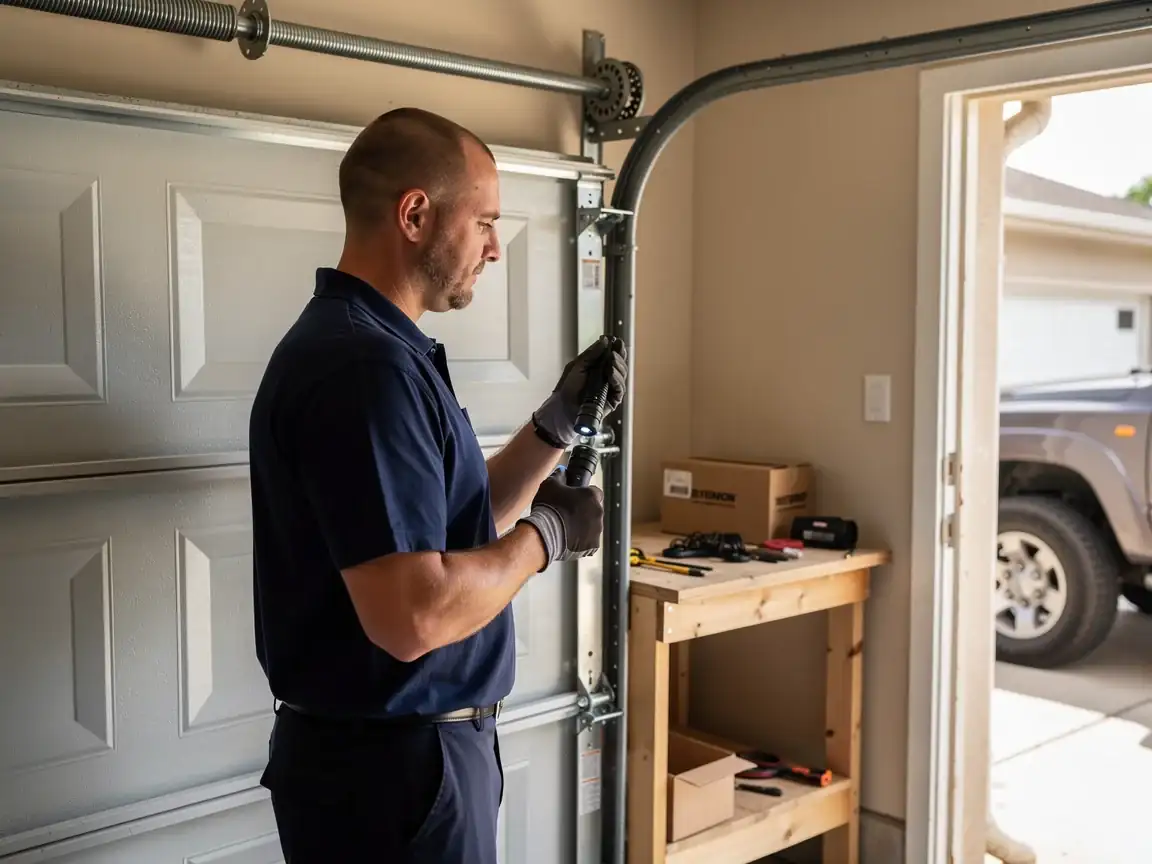
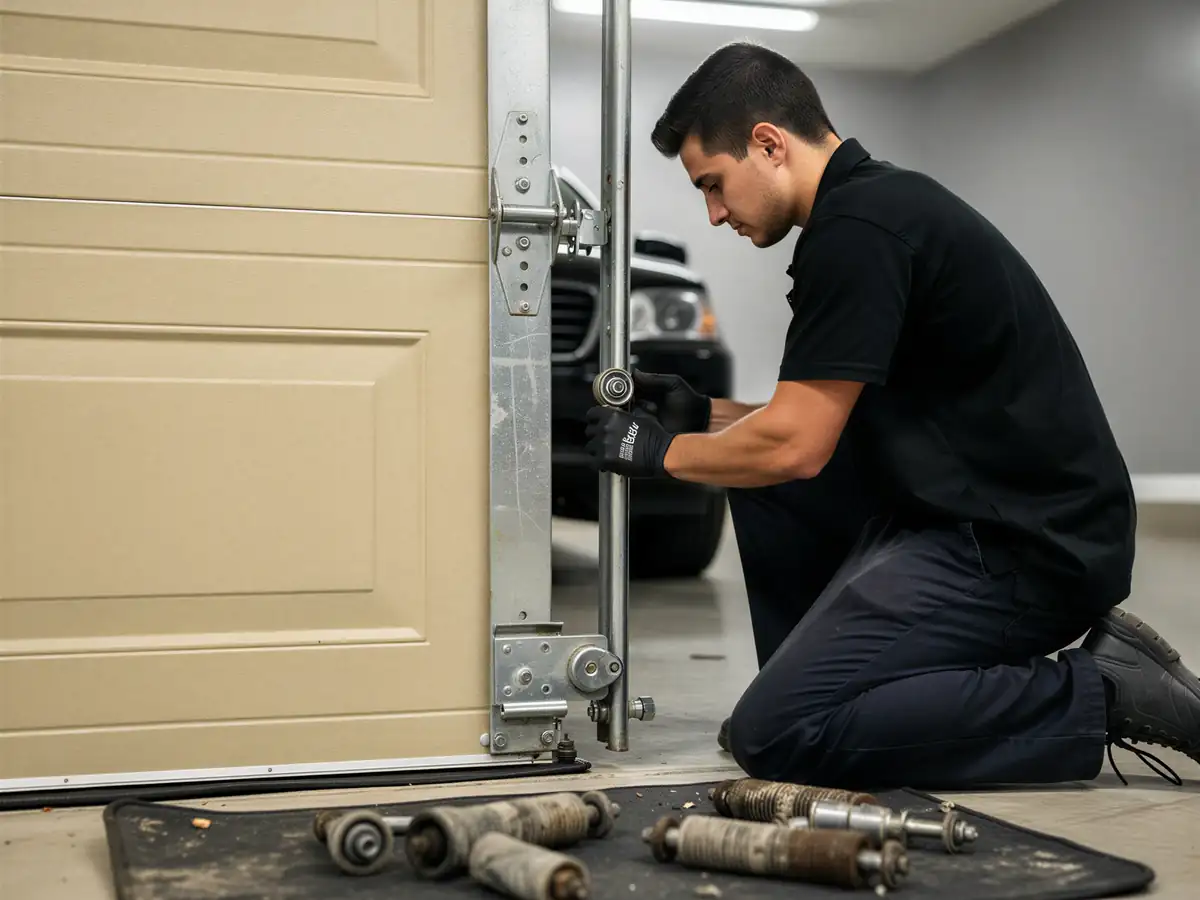
You notice it before you can name it: the door jerks instead of gliding, there's a grinding or popping sound as it passes the bend in the track, or one side seems to drag while the other runs smooth. Sometimes a roller has actually cracked and you can see a chunk missing from the wheel when the door is open. Other times the noise is steady and getting worse week by week, which usually means a roller bearing has dried out or a roller has worked loose from its stem and started riding at an angle in the track.
If you catch it early, it's a roller job. If you ignore it, the roller can jump the track entirely, bend the track, or put uneven strain on the cables and hinges next to it. A door that's merely noisy today can be a door that won't open tomorrow. The giveaway that separates a roller problem from a spring problem: the door still lifts without much extra effort, it's just rough or loud doing it. If the door feels heavy or won't stay open, that's a different repair.
The DIY Question
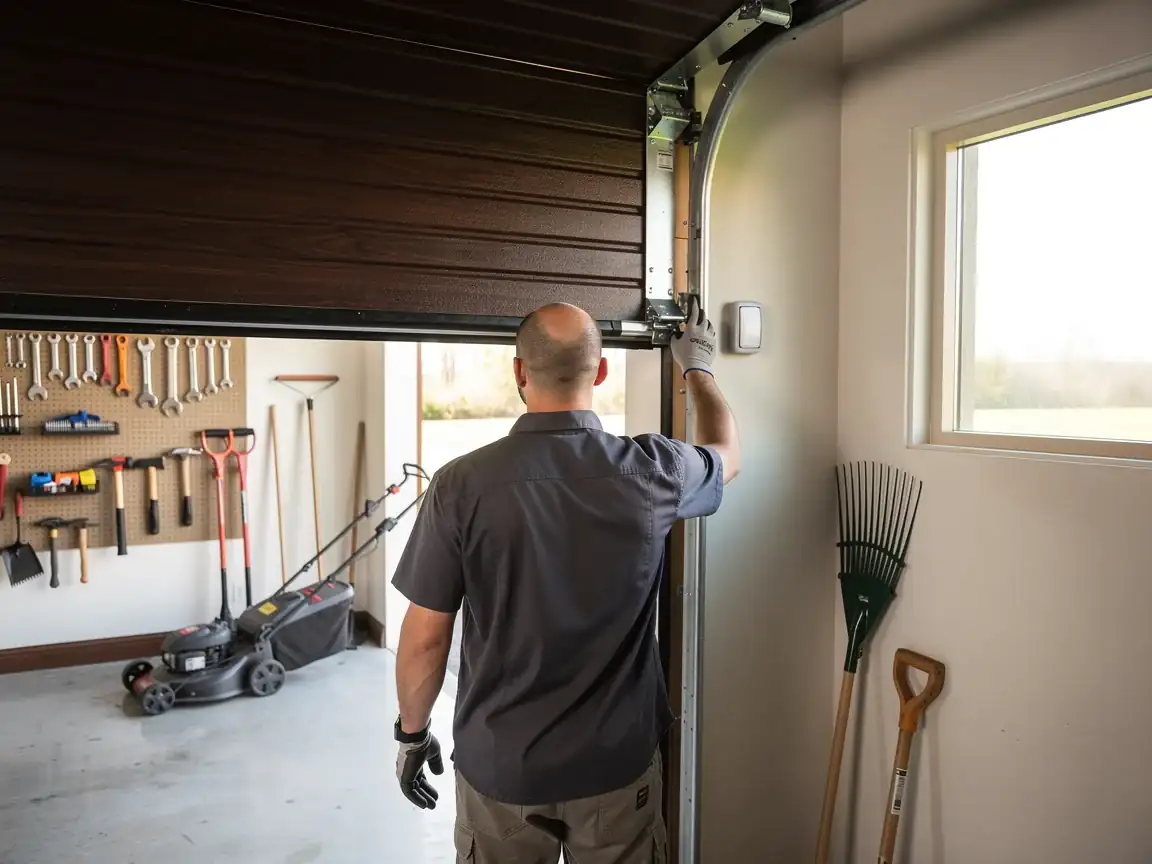
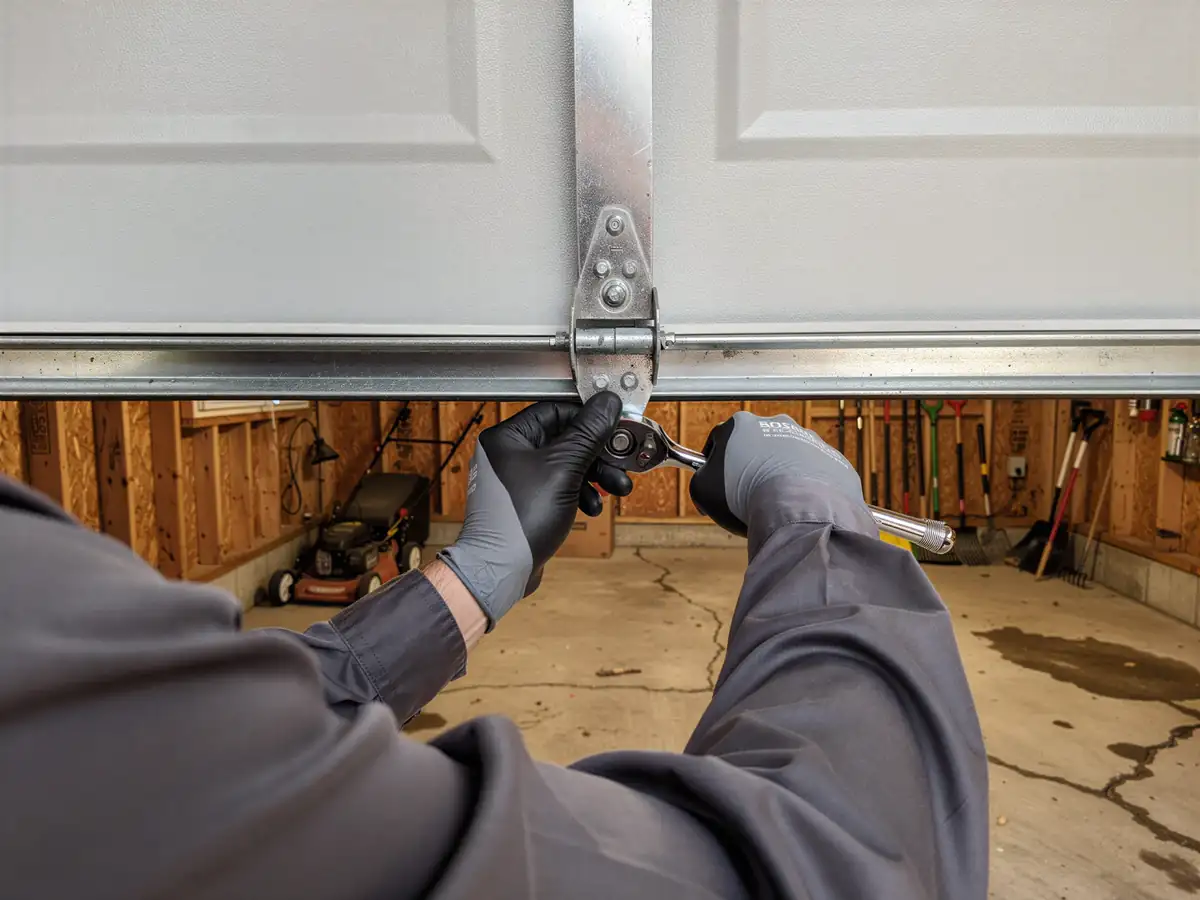
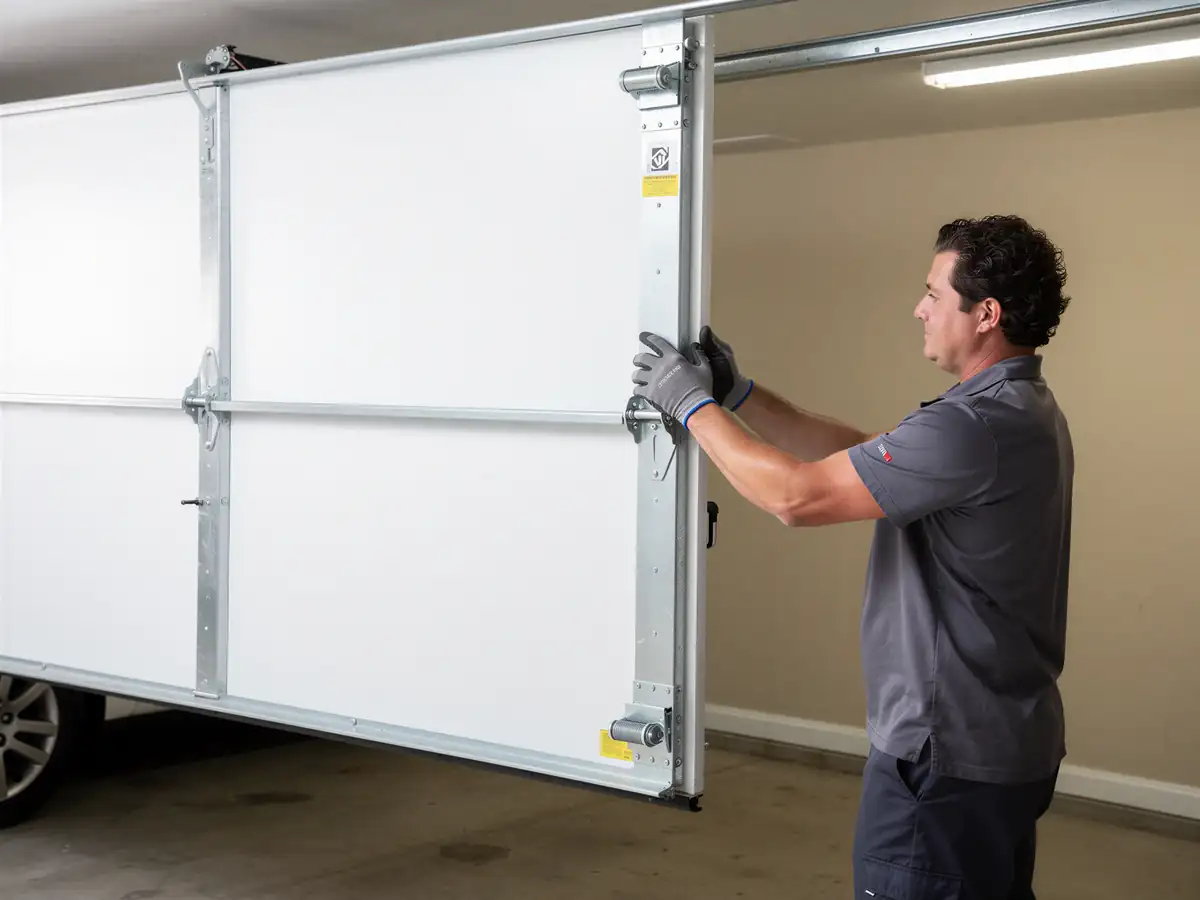
Replacing a single roller on a door that's already down and unloaded is within reach for a lot of homeowners - it's a bolt or a retainer clip, the old roller slides out, the new one slides in. Where it stops being a DIY job is the rollers nearest the bottom corners, because those brackets carry cable tension, and the rollers on a door that's currently stuck partway open, because the door is now an unpredictable weight sitting on a track that may already be bent.
We'll say plainly what we don't do: we don't talk someone through a repair over the phone on a door that's off its track or jammed, because a torsion-loaded door that lets go while you're under it is a genuine injury risk. If your door is still moving and the problem is just noise and roughness, it's a reasonable afternoon project. If it's jumped the track or stopped moving, that's a service call, not a tutorial.
What Causes It Around Here
A lot of the housing in and around Pocatello was built between 1964 and 1995
With most of it dating to the 1980s and 90s across the area's main residential pockets. Doors and track hardware installed during that build-out are old enough now that the original rollers - often plain nylon or even steel on the earliest builds - are well past their service life even on doors that otherwise still work fine.
The other factor is the climate
Pocatello sits in a cold-winter band with real seasonal swings, and that matters for rollers specifically: the grease in the bearing stiffens in the cold, nylon rollers get brittle at low temperatures and crack instead of flexing, and the freeze-thaw cycle on an unheated garage floor works moisture into the track and roller stems. A roller that would last another few years in a mild climate gets eaten alive by a Pocatello winter. This isn't a problem unique to one street or one subdivision - it's a function of how old the stock is and how cold it gets, and we see it across the service area from Chubbuck to Fort Hall.
What the Repair Takes
A straightforward roller replacement - swapping out worn or cracked rollers for new ones, checking the track alignment while the door's apart, and making sure nothing else near it (hinges, cables, the bottom bracket) is showing the same wear - is usually a single visit. We'll also look at whether you're due for an upgrade to sealed-bearing nylon rollers instead of a like-for-like swap, since in this climate the upgrade tends to pay for itself in fewer callbacks.
What it doesn't take: a new door. Roller wear is a maintenance item, not a sign the door itself is failing, and we're not going to sell you a full replacement for a problem that's a few parts and labor. Where it does take more than one visit is if the track has already bent from a jumped roller - then we're straightening or replacing track sections too, and that's a longer job we'll quote on-site once we can see the actual damage.