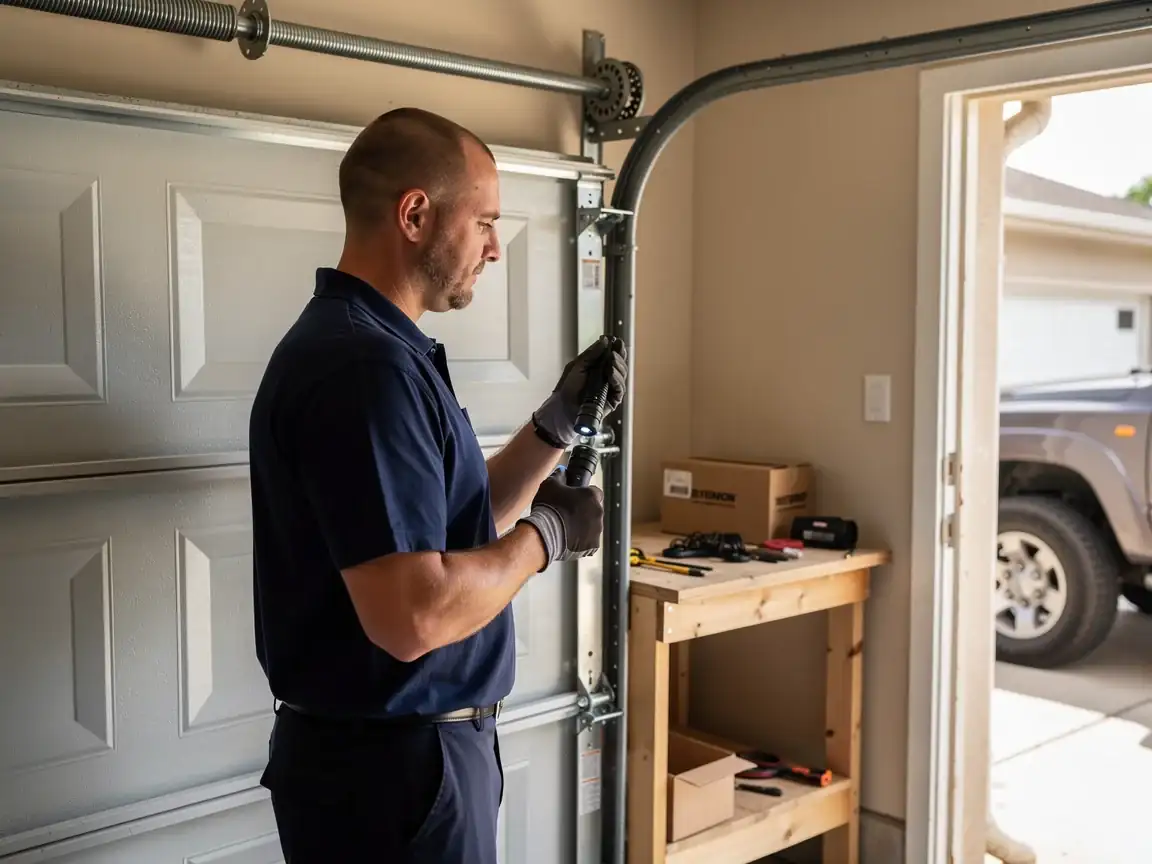
What Local Conditions Do
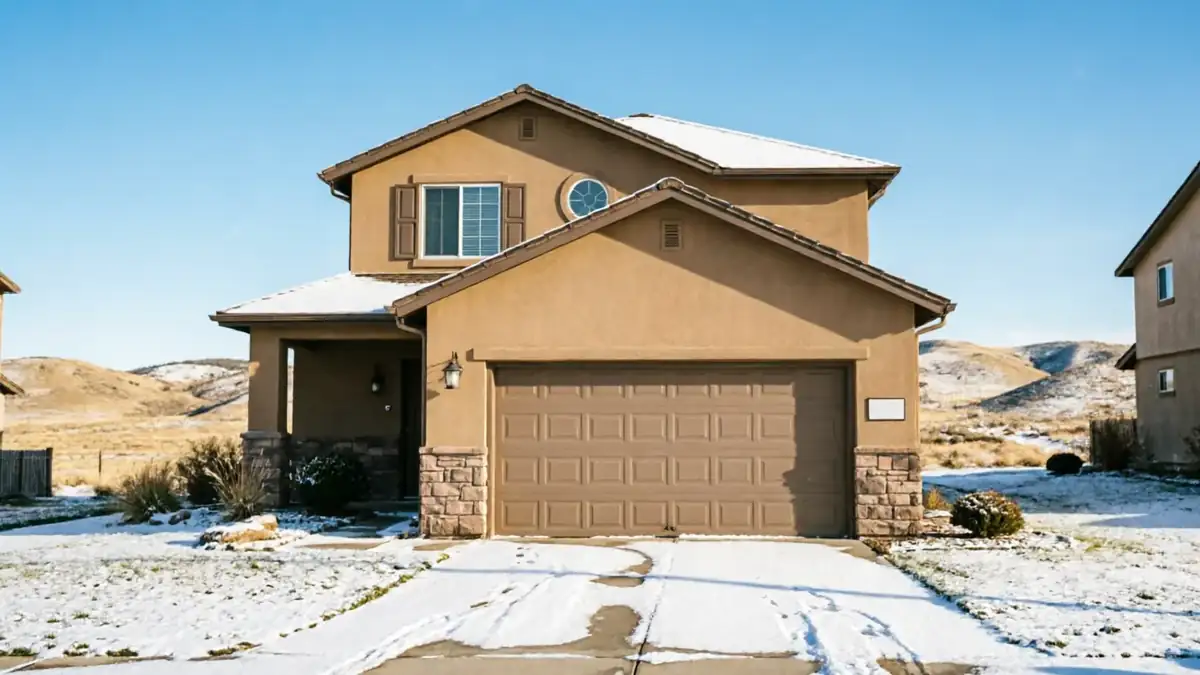
Steel doesn't behave the same at 10 degrees as it does at 60. A torsion spring under tension is already working hard just holding up a 150-plus pound door; cold makes the steel stiffer and more brittle, so the same load that it shrugged off in August can be the one that snaps a coil in January. Pocatello sits in a severe cold climate band, and that matters more here than in a lot of places because of when the housing went up. Most houses across the service area were built between 1964 and 1995, with a median build year landing around 1980 - right in the window when torsion-spring setups became the standard but galvanizing and coil-coating quality varied a lot from one manufacturer to the next. A spring installed in 1982 has had forty-some winters to fatigue. Add a hard cold snap and a spring that was already down to its last few thousand cycles can let go with a bang loud enough to hear from the kitchen. This isn't a defect story - it's a math story. Age plus repeated cold-flex cycles equals failure, and that math runs the same whether the door is in town or out toward Chubbuck.
What to Look At First
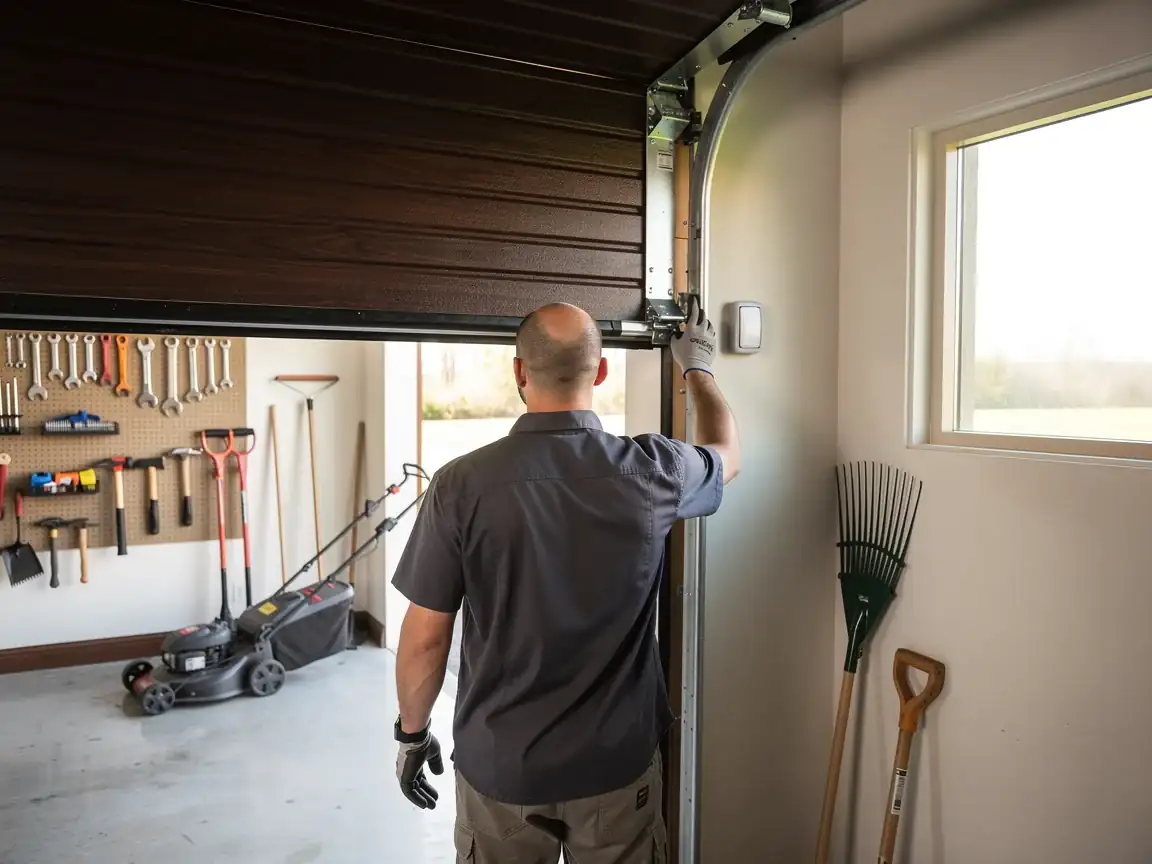
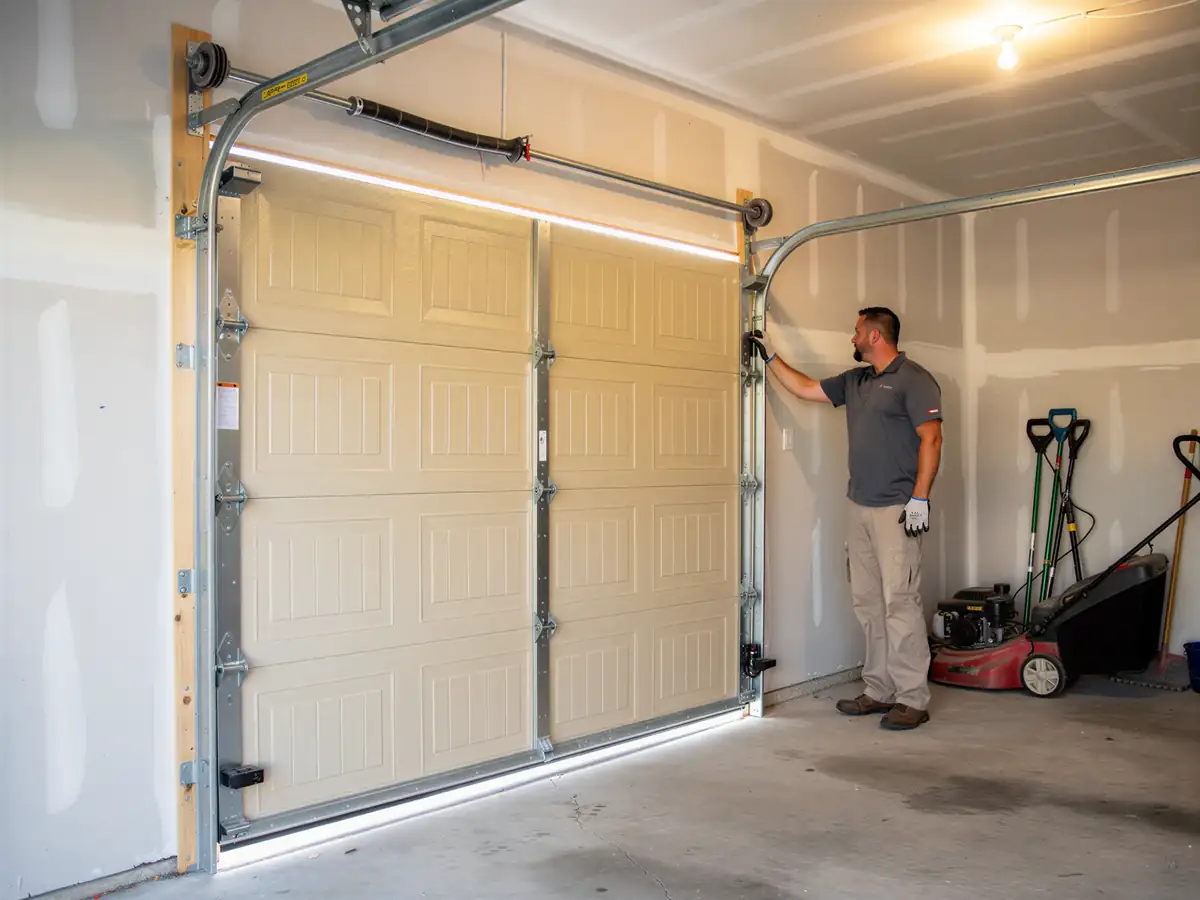
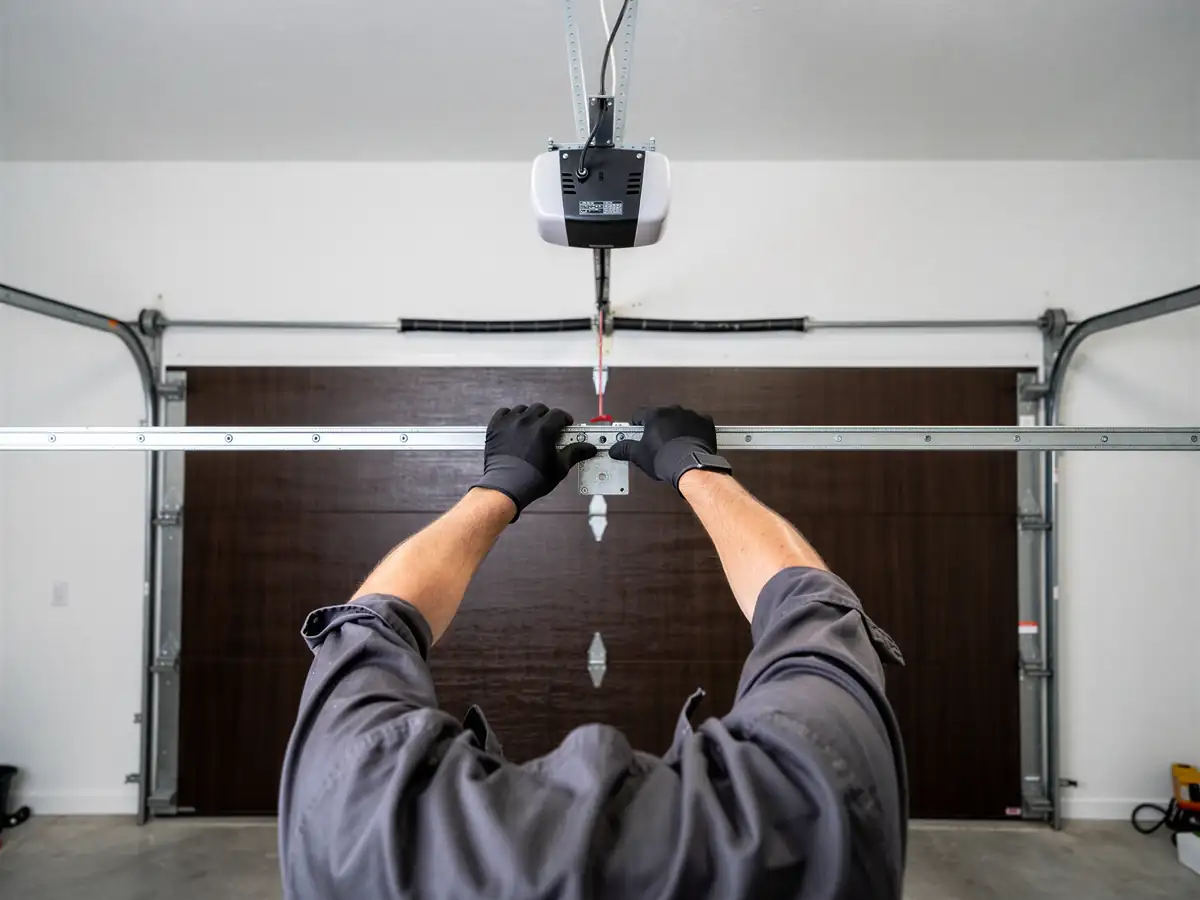
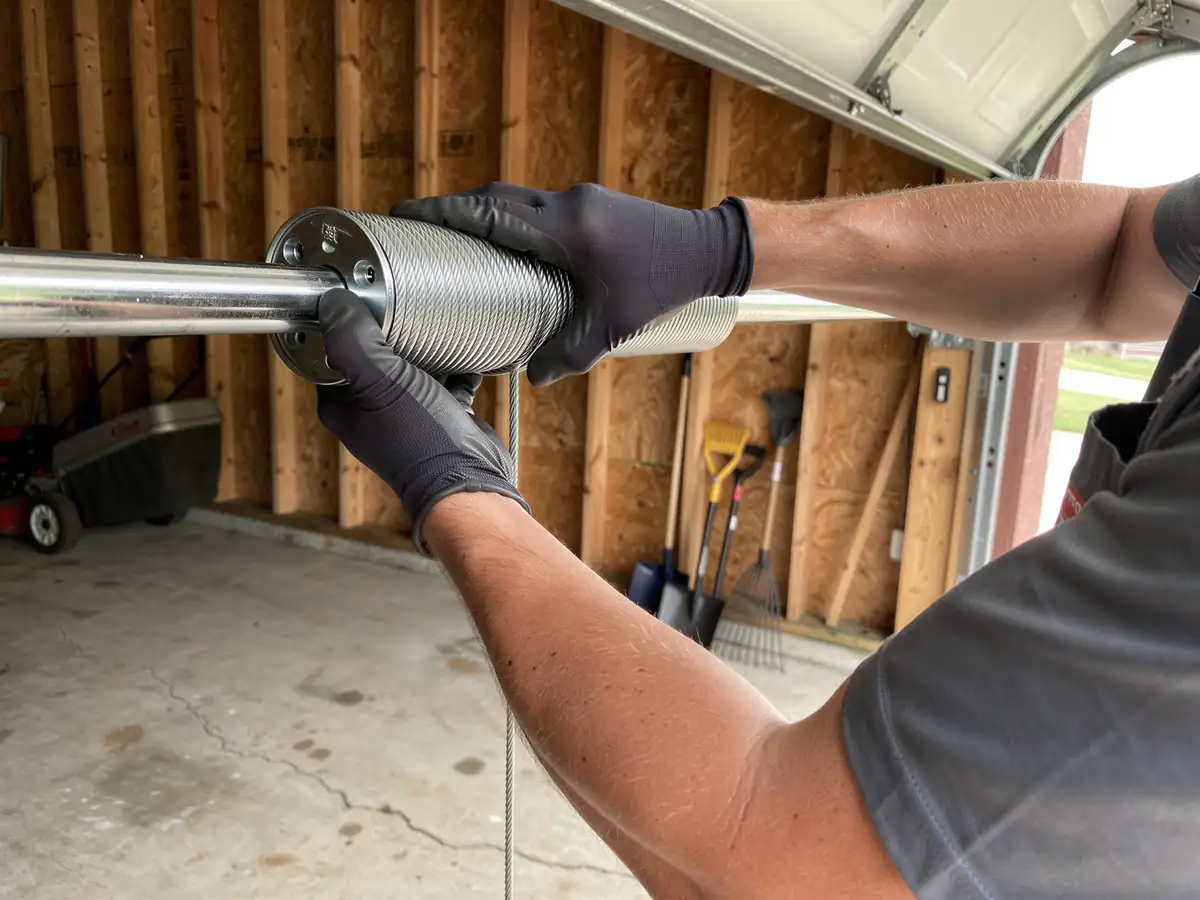
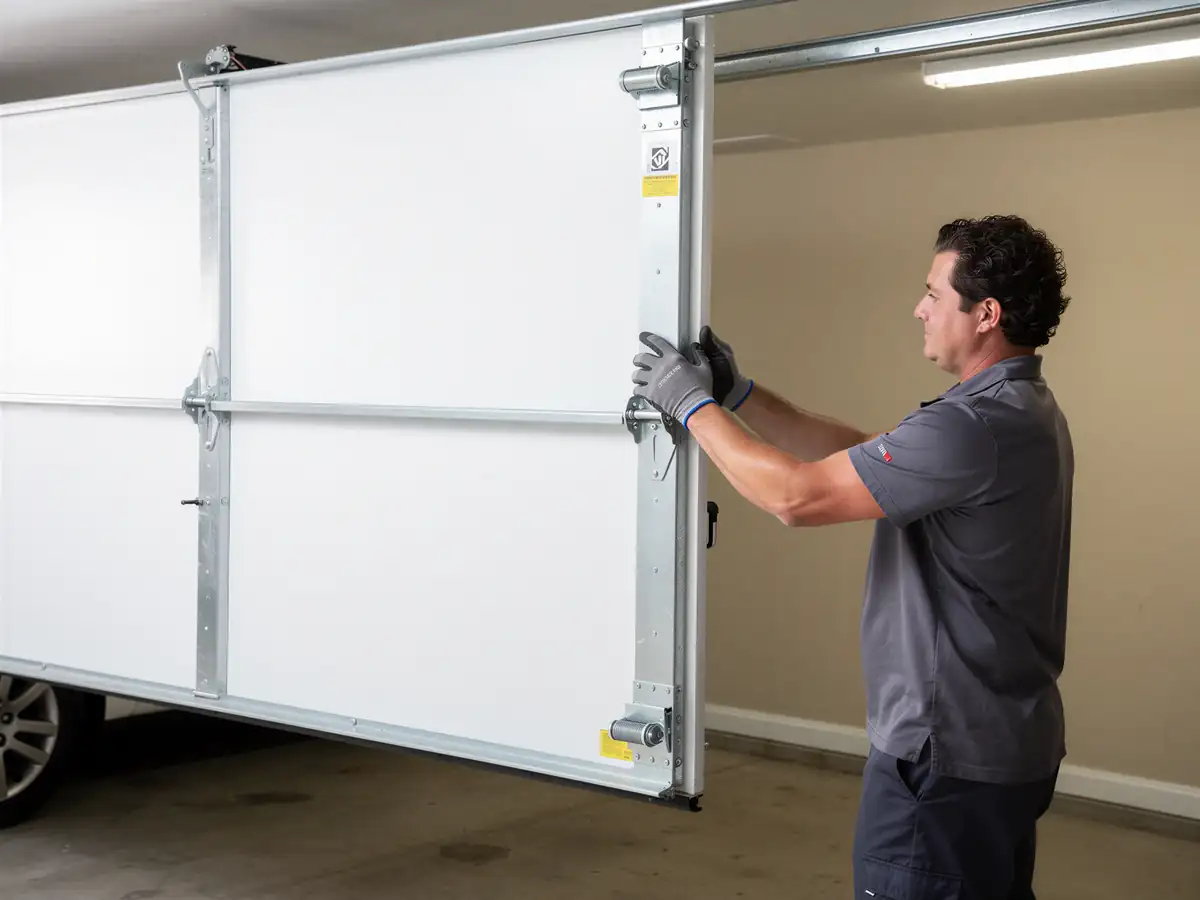
Before you touch anything, look at the spring itself. On a double door you've usually got two torsion springs on a shaft above the opening; on a single, sometimes just one. Check for a visible gap in the coil - a clean separation means it's already broken, not just weak. Next, look at the cables on either side of the door. Frayed strands near the bottom bracket are a sign the cable has been compensating for a spring that's lost tension, which is common in houses from the 1964-1995 build era where original hardware is still in service. Try lifting the door halfway by hand with the opener disconnected - it should hold position on its own. If it drops or shoots up, the spring is no longer carrying its share of the weight. Listen for a bang from the garage on a cold morning; that's often the spring going, not the opener. Don't force the door with the opener once you suspect a broken spring - you'll burn out the motor fighting dead weight it was never built to lift alone. A five-minute look at these points tells you more than guessing from the driveway.
When It Stops Being a DIY Job
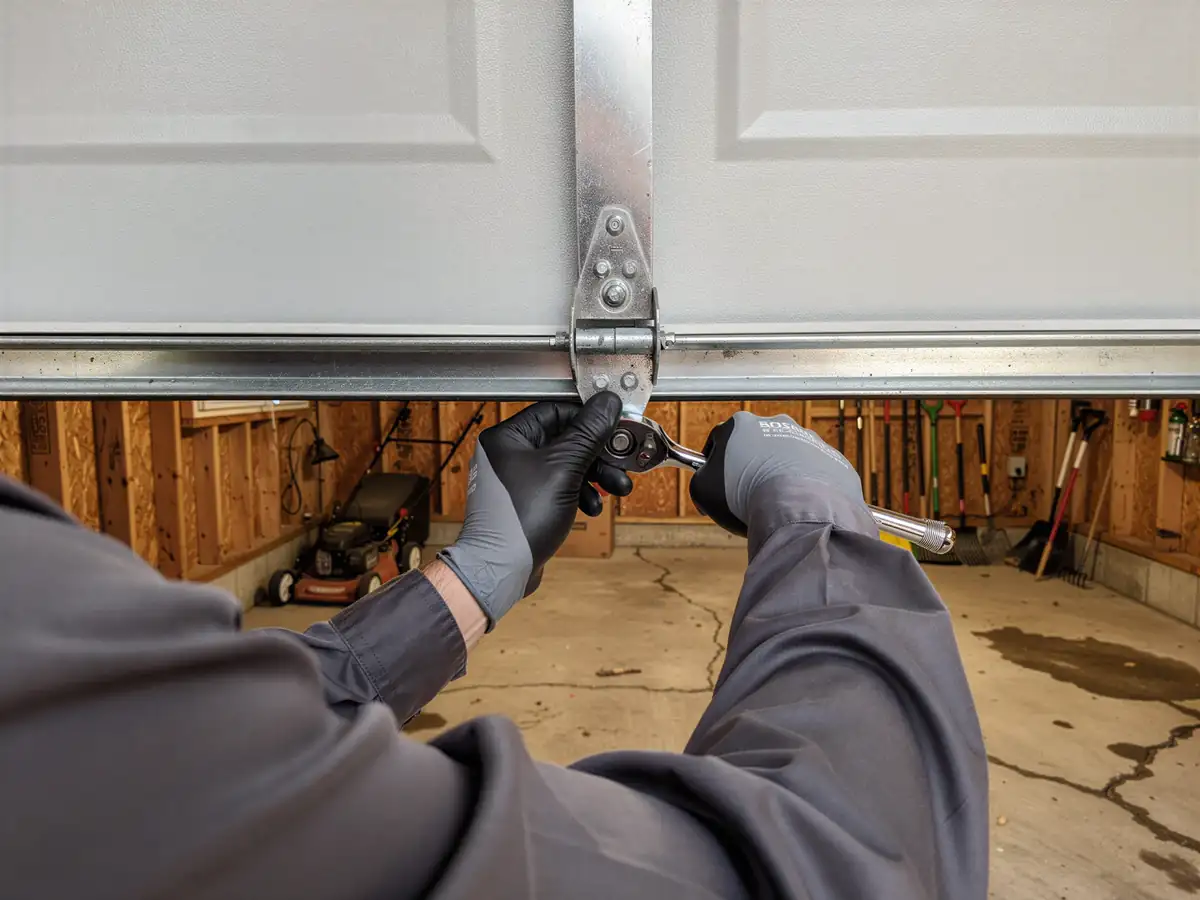
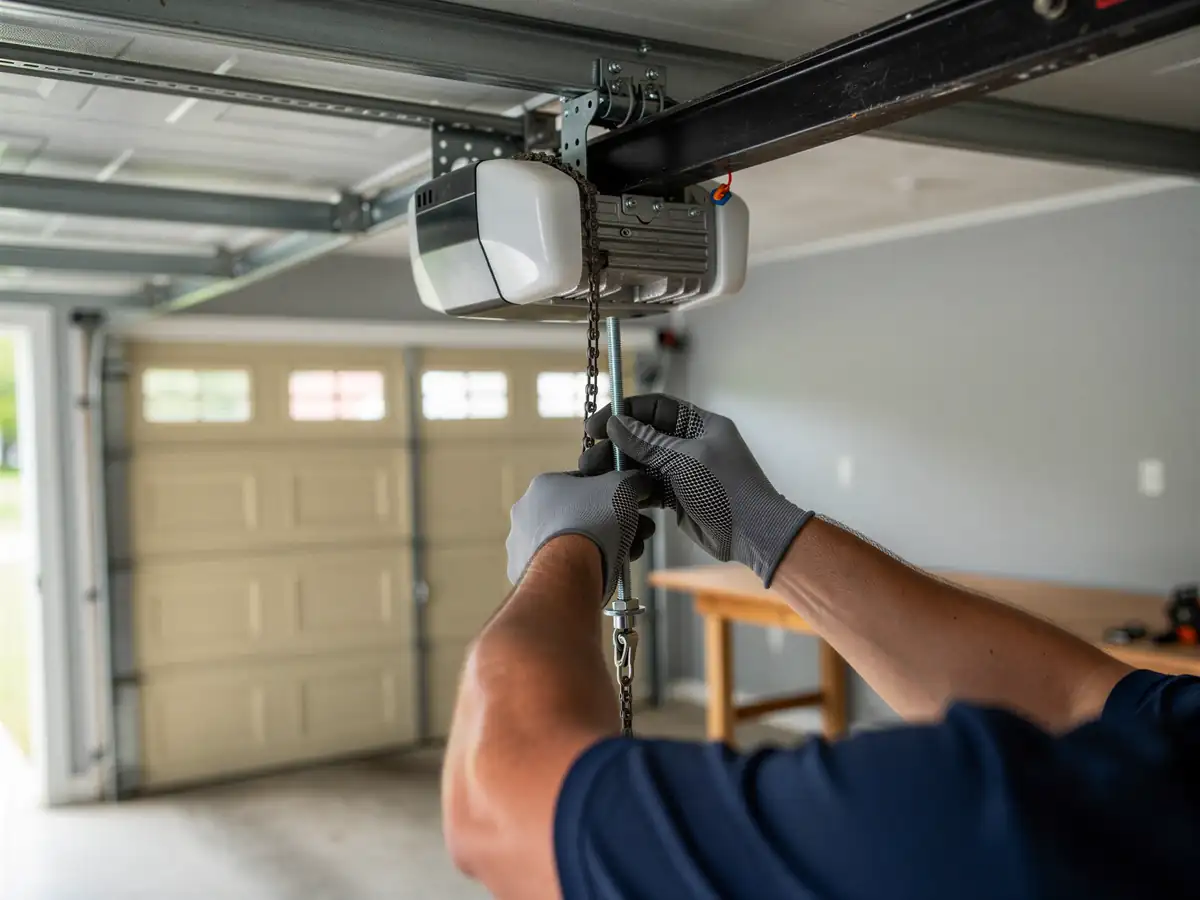
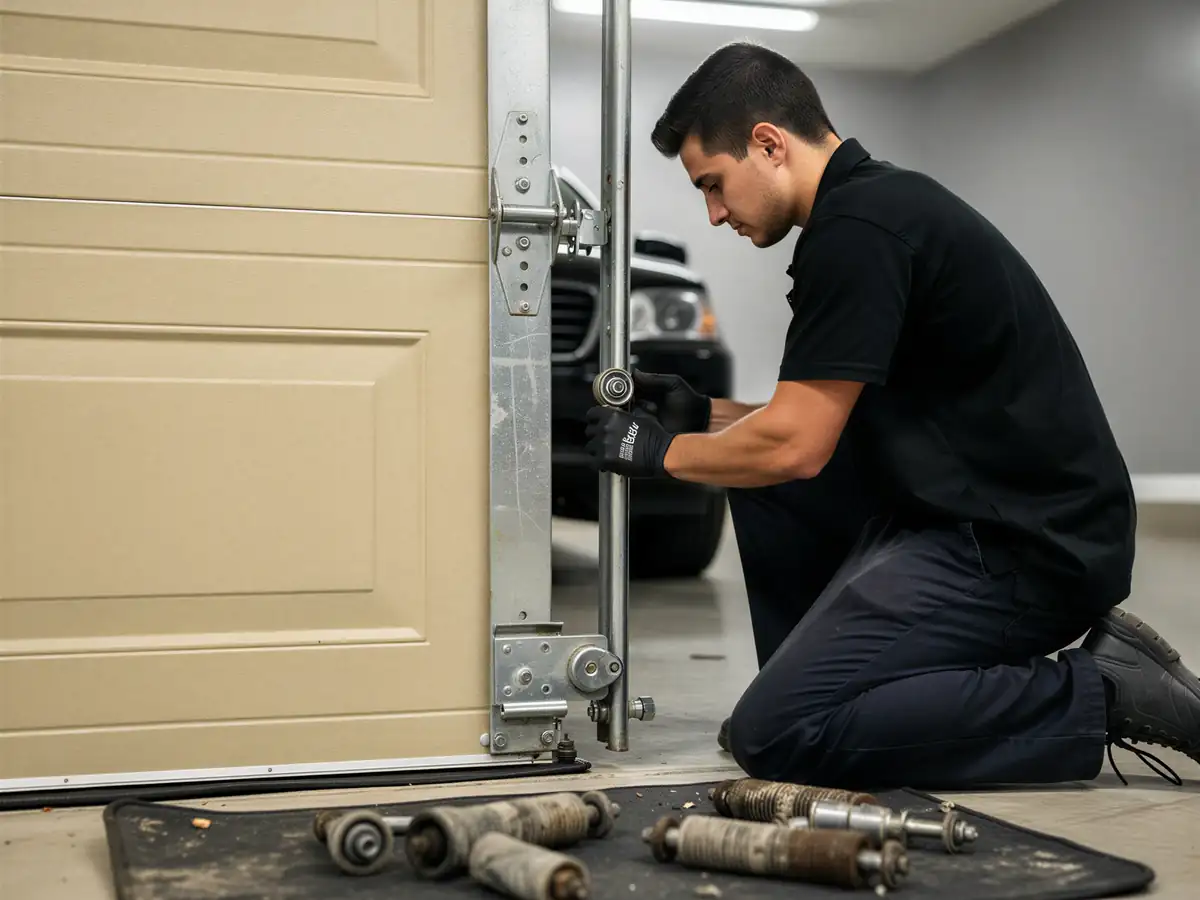
Swapping a torsion spring means working against serious stored tension on a bar that can take a hand off if the winding bars slip - this is not a YouTube-on-Saturday repair, and we'll say that plainly even though it costs us nothing to let you try. If the spring has already broken, the door is dead weight and needs a professional lift, not a jack from the garage. If you're hearing a grinding or popping sound but the door still moves, that's a spring on its way out, and it's worth a call before it finishes failing on its own schedule - usually the coldest morning of the week. One honest limit: if your springs and the surrounding hardware are original to a house built in the 1964-1995 window, matching parts can take longer to source than a same-day fix, since exact coil specs from that era aren't always on the truck. We'd rather tell you that up front than promise a turnaround we can't back up.