The Symptom
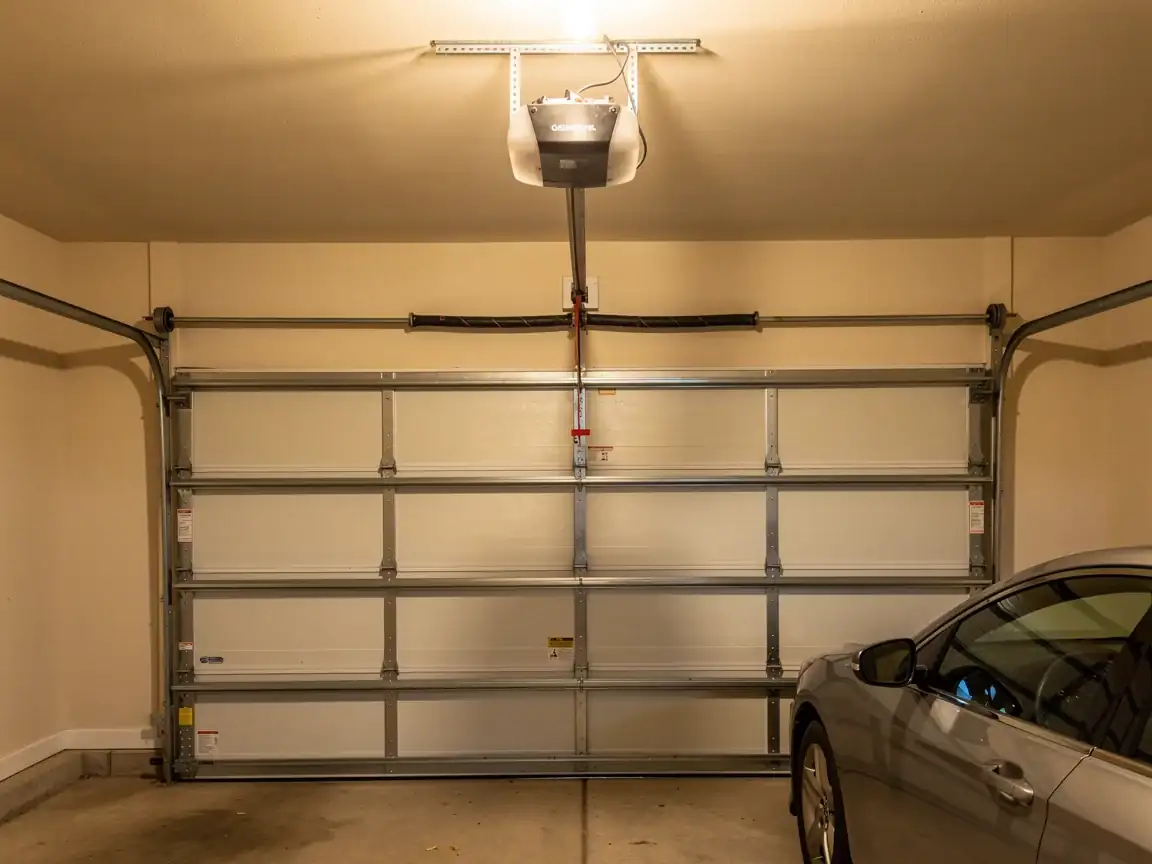
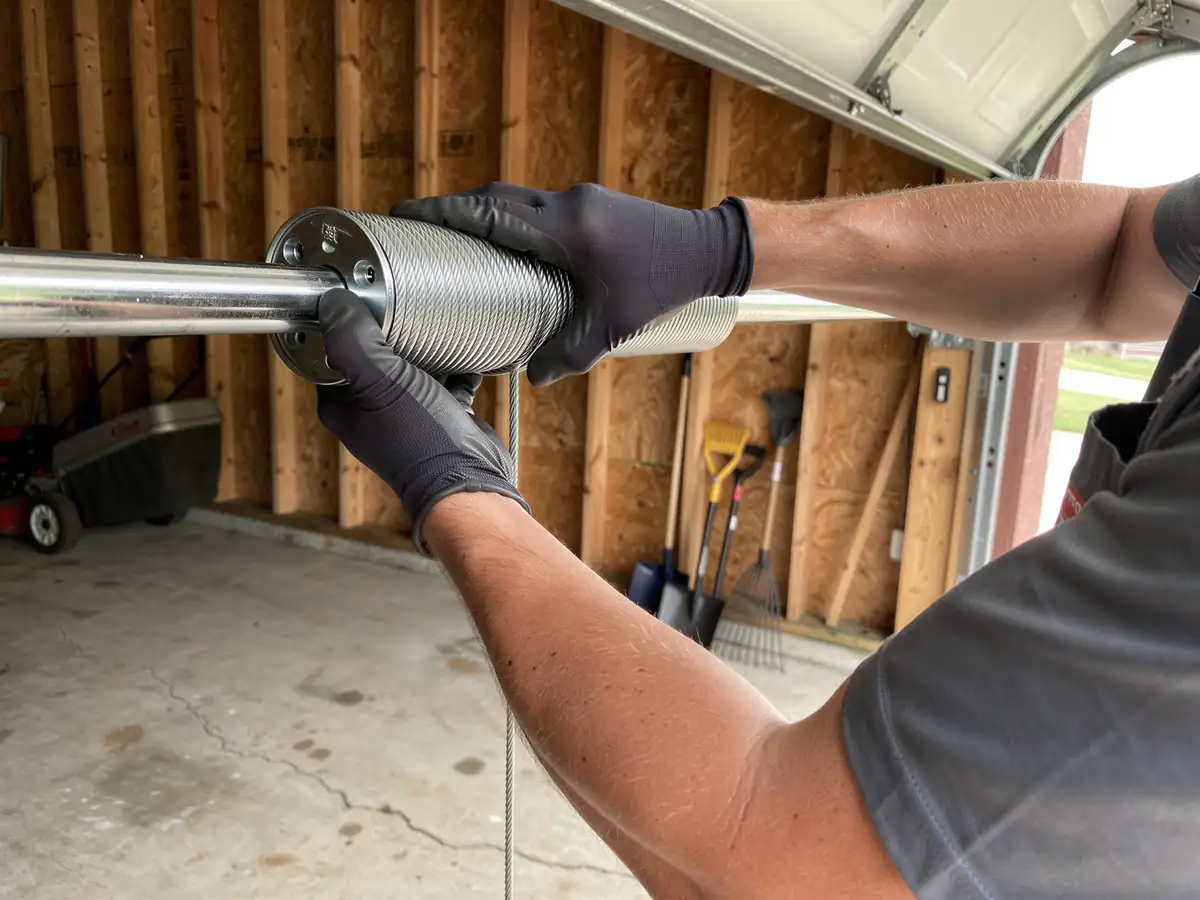
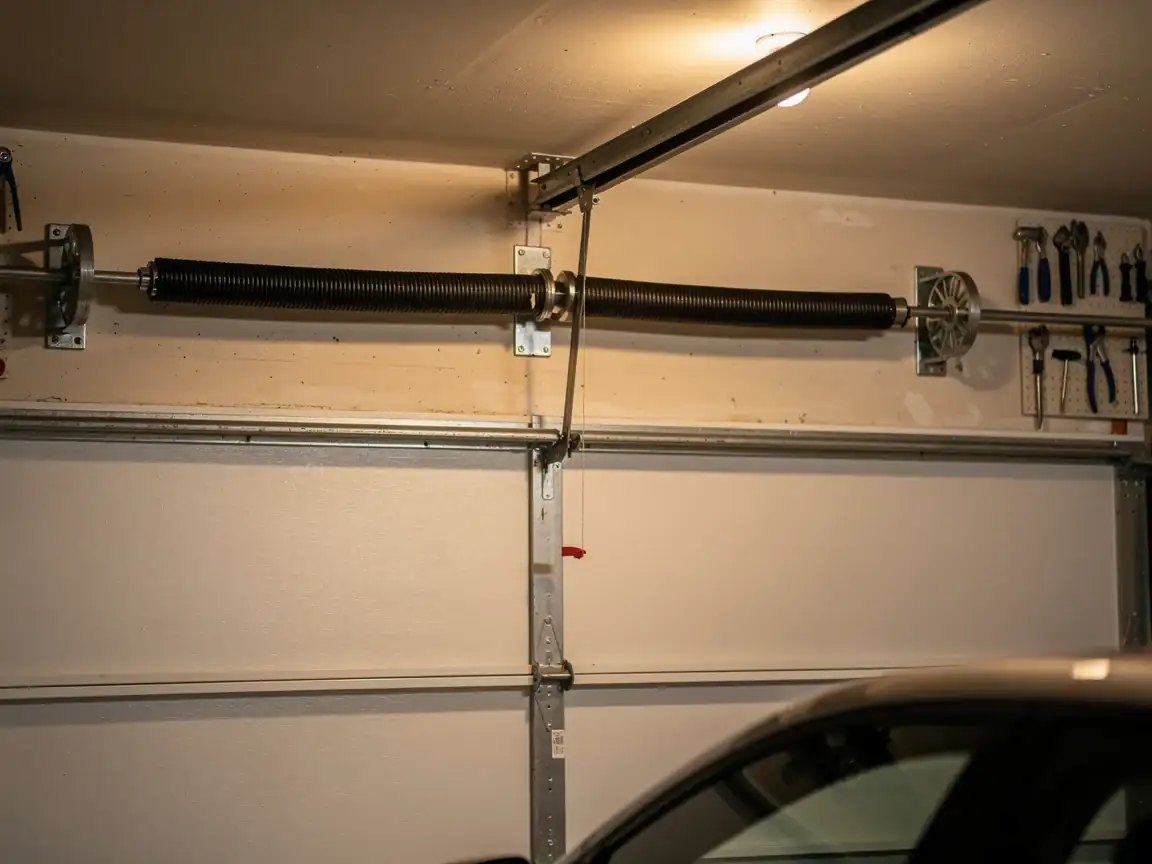
The call usually starts the same way: the door won't go up, or it goes up six inches and stops, or it slams down the last foot instead of settling. Sometimes there's a loud bang from the garage first, followed by a door that won't budge at all. That bang is almost always a torsion spring letting go.
In a house built in the 1960s through the 1990s - which covers most of the housing stock around Pocatello - that spring has usually been doing its job, unassisted, for decades. Springs are rated by cycle count, not by calendar year, but in this climate the cold makes the metal more brittle and the swings between a warm fall and a hard winter put extra stress on the coil. When it finally breaks, it's rarely a surprise to anyone who's heard the door groaning for the past year.
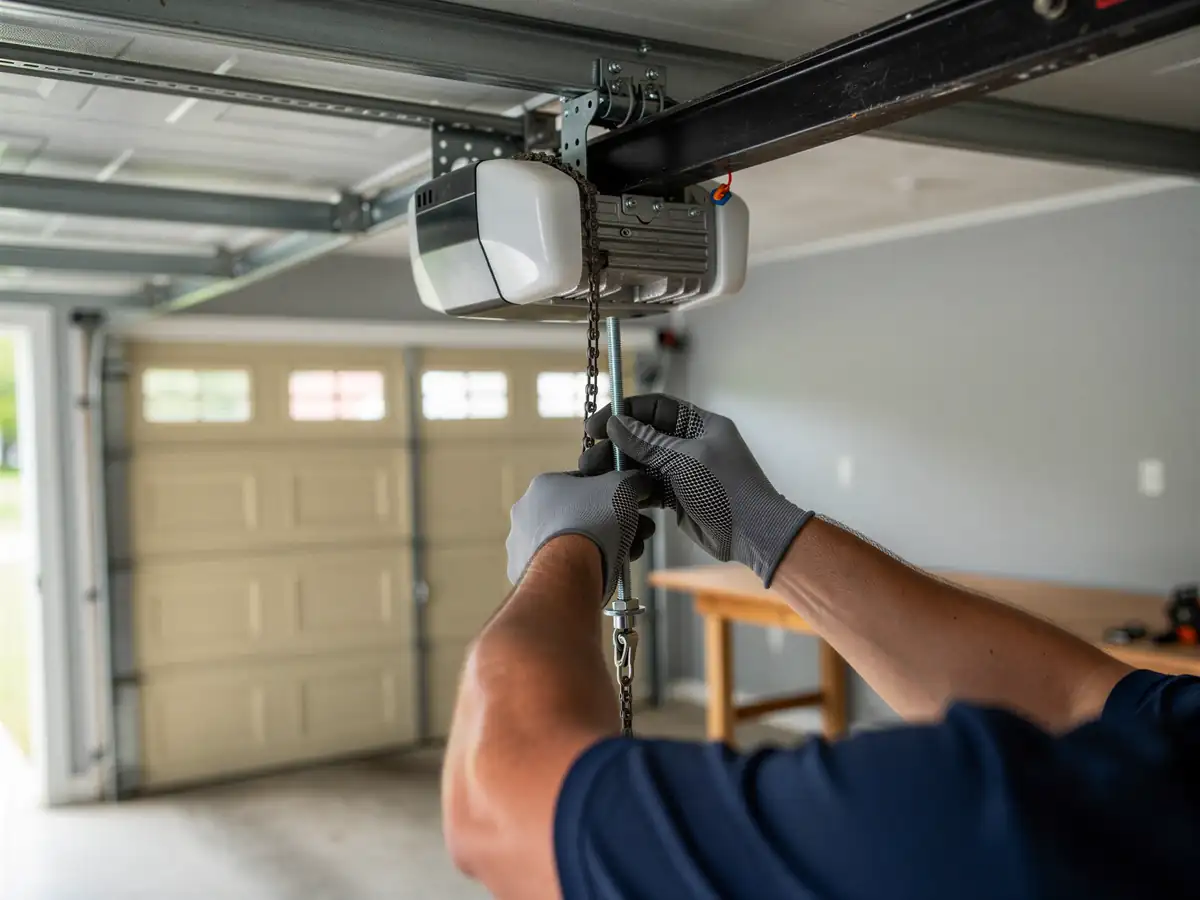
A related symptom: the opener runs but the door barely moves, or moves unevenly on one side. That's often a spring that hasn't broken yet but has lost enough tension that the opener is doing work it was never built to do.
The DIY Question
A torsion spring is wound under enough tension to break bones if it slips off a winding bar, and that's true whether the house is new or forty years old. We don't walk people through replacing one over the phone, and any guide that tells you to do it with a socket wrench and a ladder is skipping the part where it goes wrong.
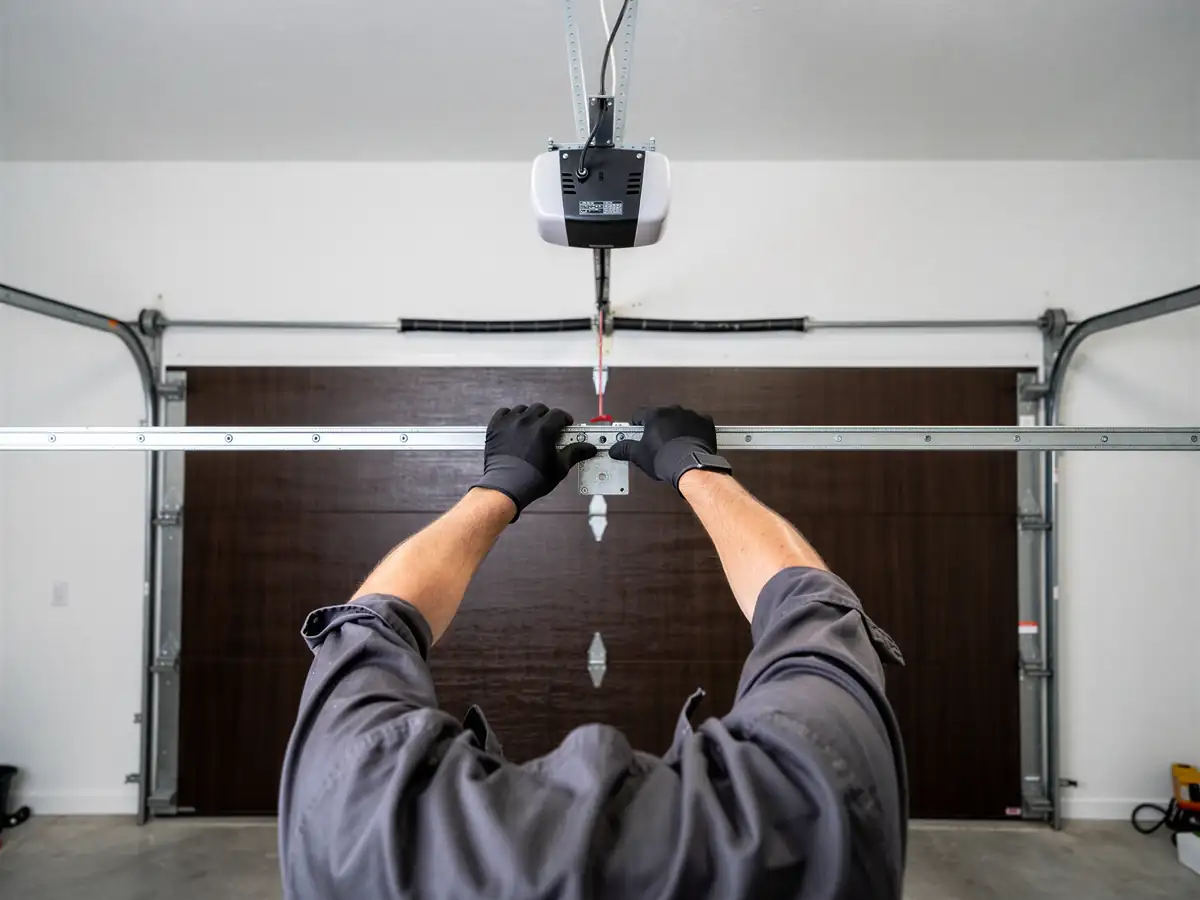
What you can check yourself: the tracks for visible dents or gaps, the cables for fraying, and whether the door is balanced - disconnect the opener and see if the door holds position about halfway up. If it drifts down on its own, the spring's weak and it's a call, not a weekend project. If the door won't move at all and you hear nothing from the opener, check the breaker before you assume the worst.
One honest limit here: if your opener is original to a 1980s install, parts for it may not exist anymore, and we're not going to pretend we can source a board for a unit that's been out of production for thirty years. Sometimes the repair is replacing the opener, not fixing it.
What Causes It Around Here
Most of the houses we work on across Pocatello and the surrounding area
Including homes toward Chubbuck, out past Fort Hall, and the scattered properties near Arbon Valley - were built between 1964 and 1995, with the bulk of that stock going up in the 1980s and 90s. That means original torsion springs, original rollers, and in a lot of cases original steel tracks that were never upgraded to the nylon rollers that handle cold better.
The cold matters more than people expect
This area sits in a severe cold climate band, and steel springs and cables contract in low temperatures, which raises the tension they're already under and shortens their working life compared to a mild-climate install of the same age. Grease that was fine in August turns stiff in January, which is why a lot of our winter calls are doors that worked fine the day before and then didn't.
Rollers are the other common failure in houses from this era
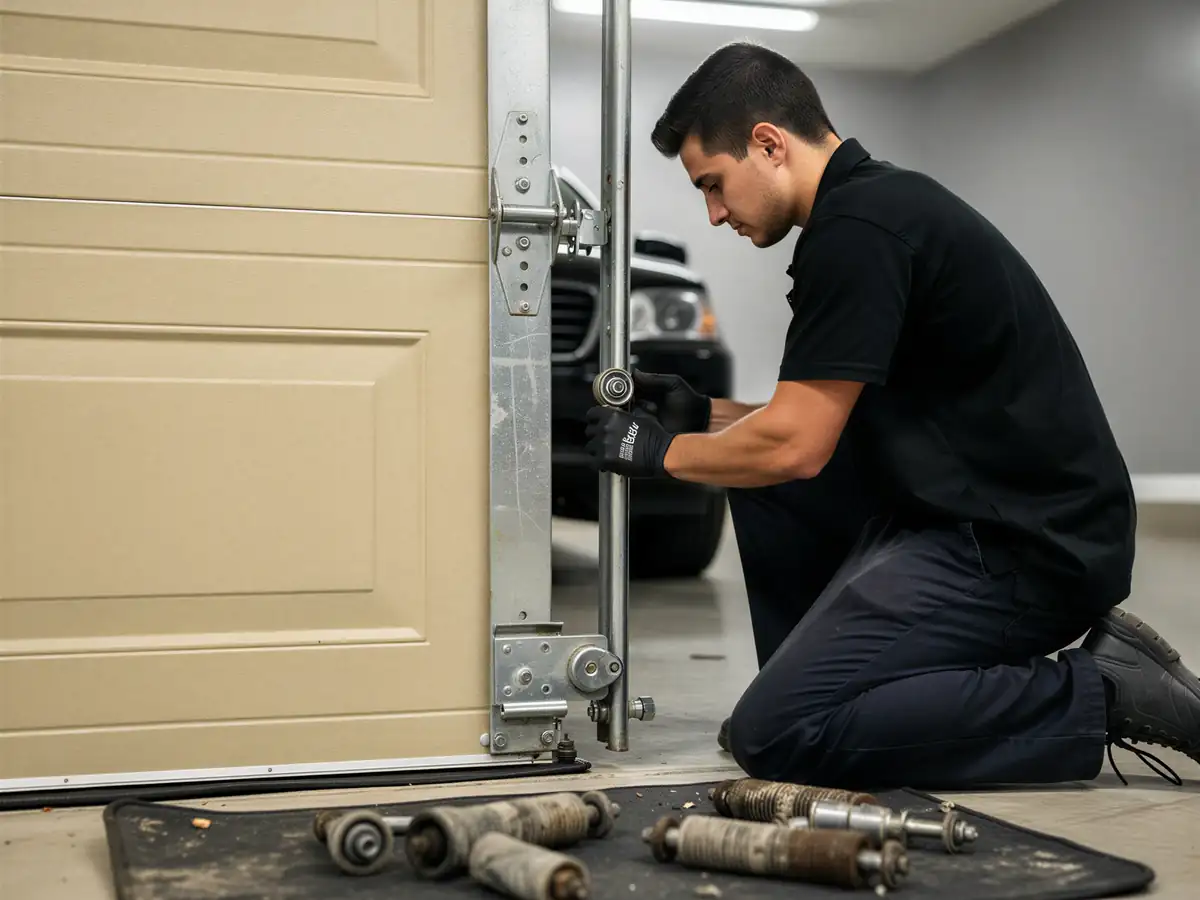
The original steel or early-generation nylon rollers wear grooves into themselves over thirty-plus years of seasonal temperature swings, and a worn roller puts side-load on the track that eventually bends it.
What the Repair Takes
A straightforward torsion spring replacement is usually a same-visit job once we're on site with the right spring size for your door - we measure wire gauge, coil diameter, and length rather than guessing, since a mismatched spring just moves the failure point to the cables or the opener.
If the rollers or track are also original - common in the 1980s-era houses that make up a lot of this area's 3,950 owner-occupied houses - we'll usually recommend swapping those at the same time rather than coming back out in six months. It costs more up front and less over the life of the door.
What it doesn't take: a full door replacement in most cases. If the panels aren't dented or rotted and the opener still runs clean, the spring and hardware fix solves the problem without the cost of a new door. We'll tell you straight if we think the door's past that point - it happens, but less often than people assume when they hear the bang and panic.