The Symptom
You notice it in small ways before the door quits on you. The opener strains and groans partway up. The door shudders instead of gliding. A panel rattles against the track on the way down, or the whole unit seems to hesitate for a second before it catches. None of that is normal, and none of it fixes itself.
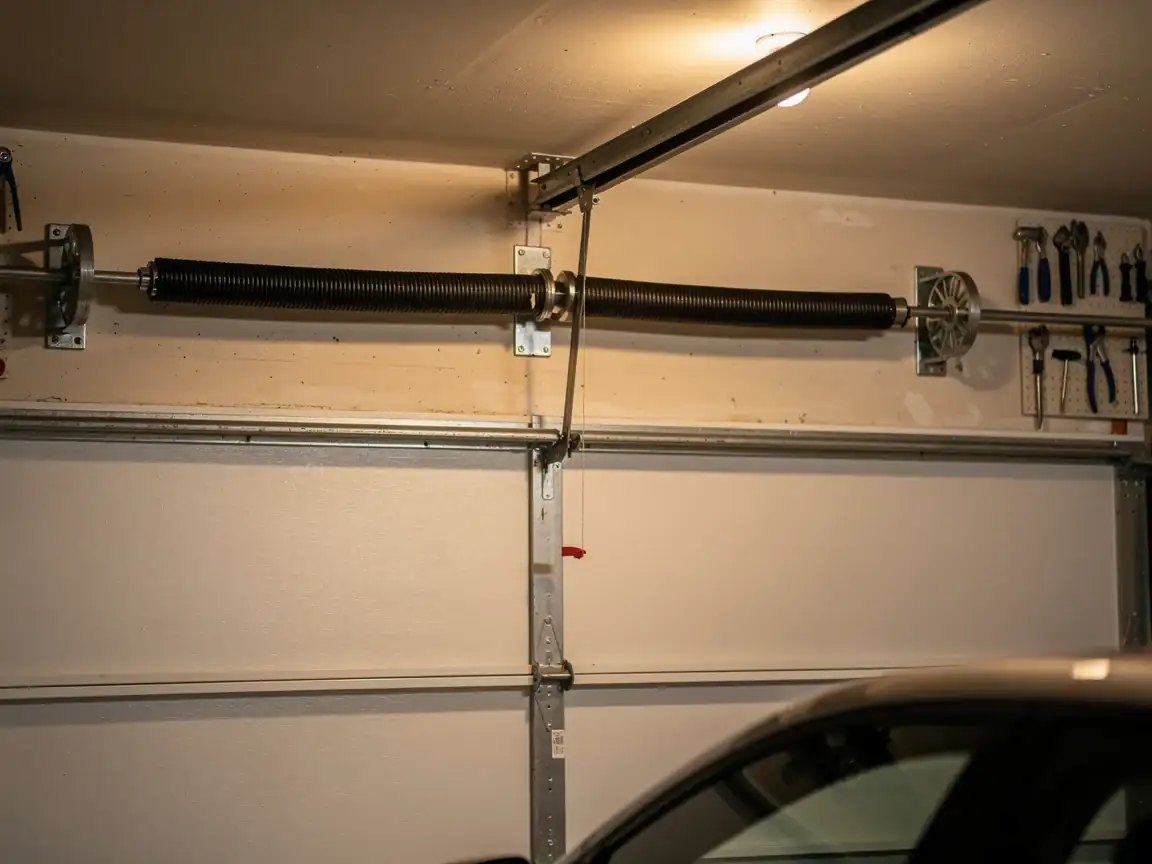
In a service area where housing mostly went up between 1964 and 1995, with a big share of that stock dating to the 1980s and 90s, these symptoms usually trace back to hardware that has quietly worked for decades without ever getting looked at. A torsion spring loses tension gradually, not all at once, and a cold snap is often what finally exposes the slack. Rollers wear down the same way. By the time you hear the noise, the part has usually been failing for months.
Ignoring it doesn't buy you time. A door that's straining against a weak spring puts more load on the opener gears and the cables, which turns a cheap fix into a bigger one. The symptom is the warning, not the problem itself.
The DIY Question
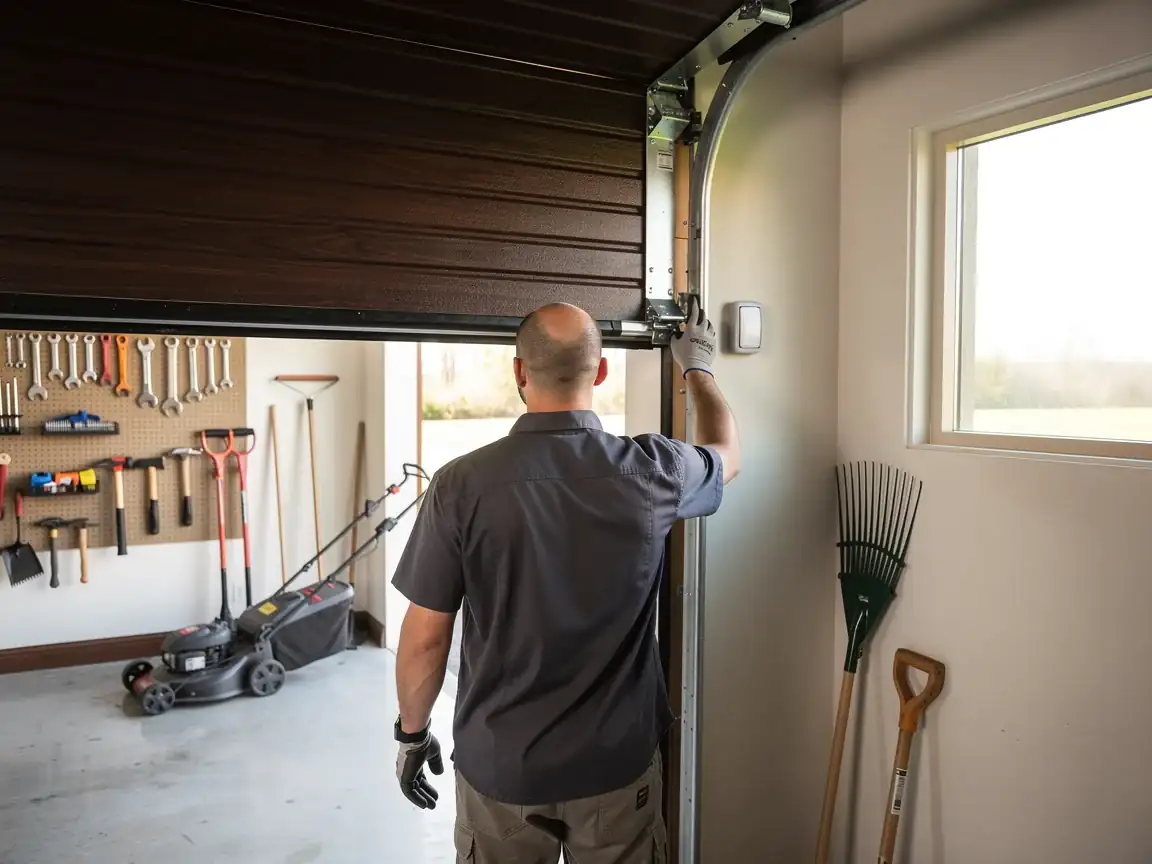
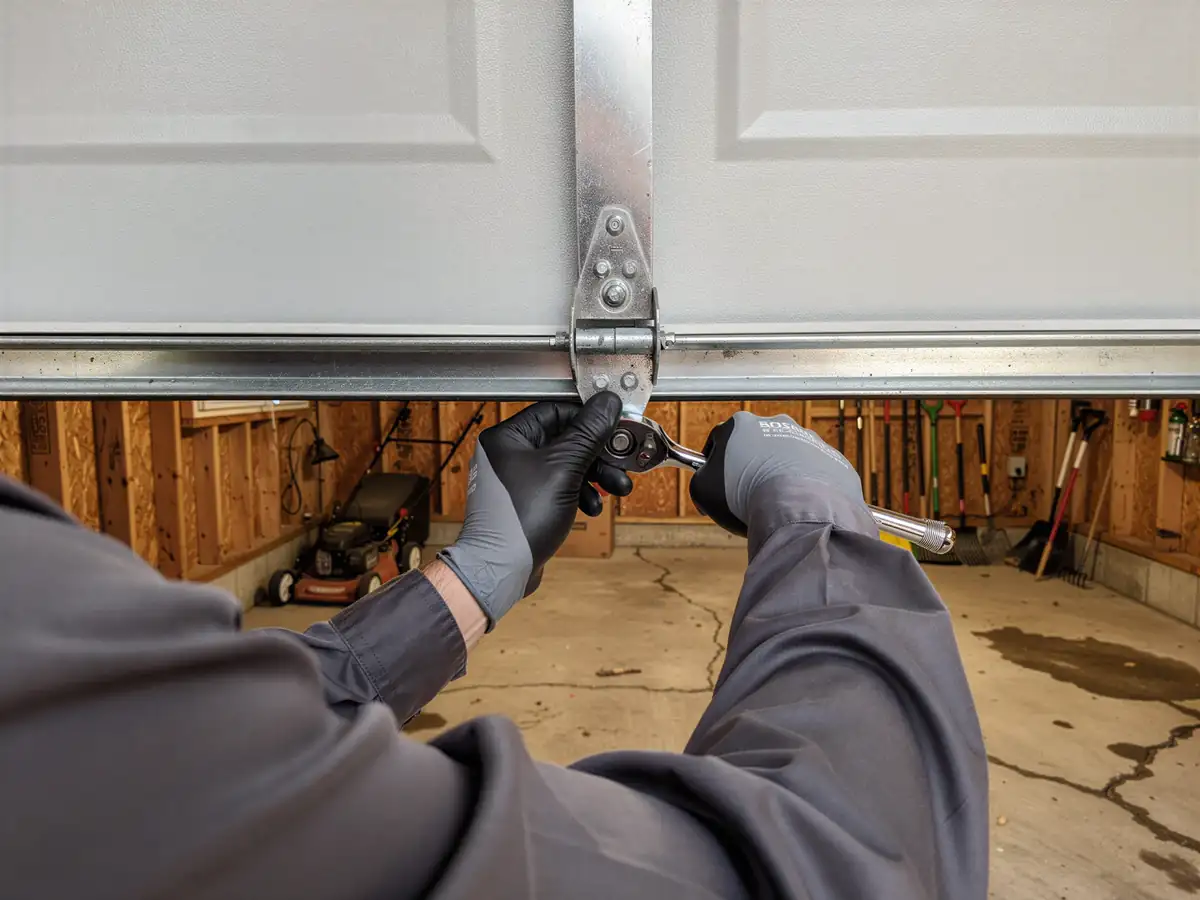
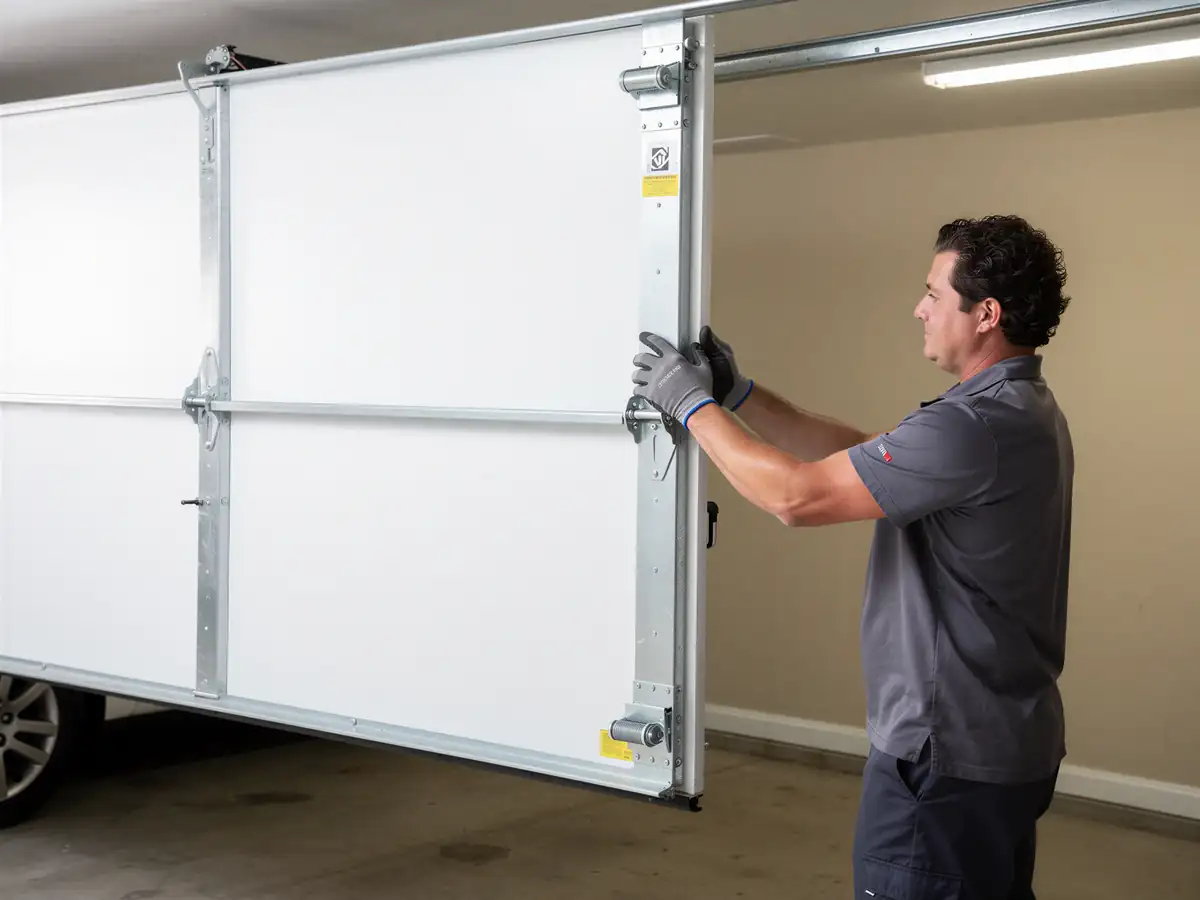
There's real maintenance a homeowner can do without a truck showing up. Wiping down and lightly oiling the rollers and hinges, checking that the track is free of debris, and watching the door's balance by disconnecting the opener and lifting it by hand - a properly balanced door should hold its position about halfway up on its own.
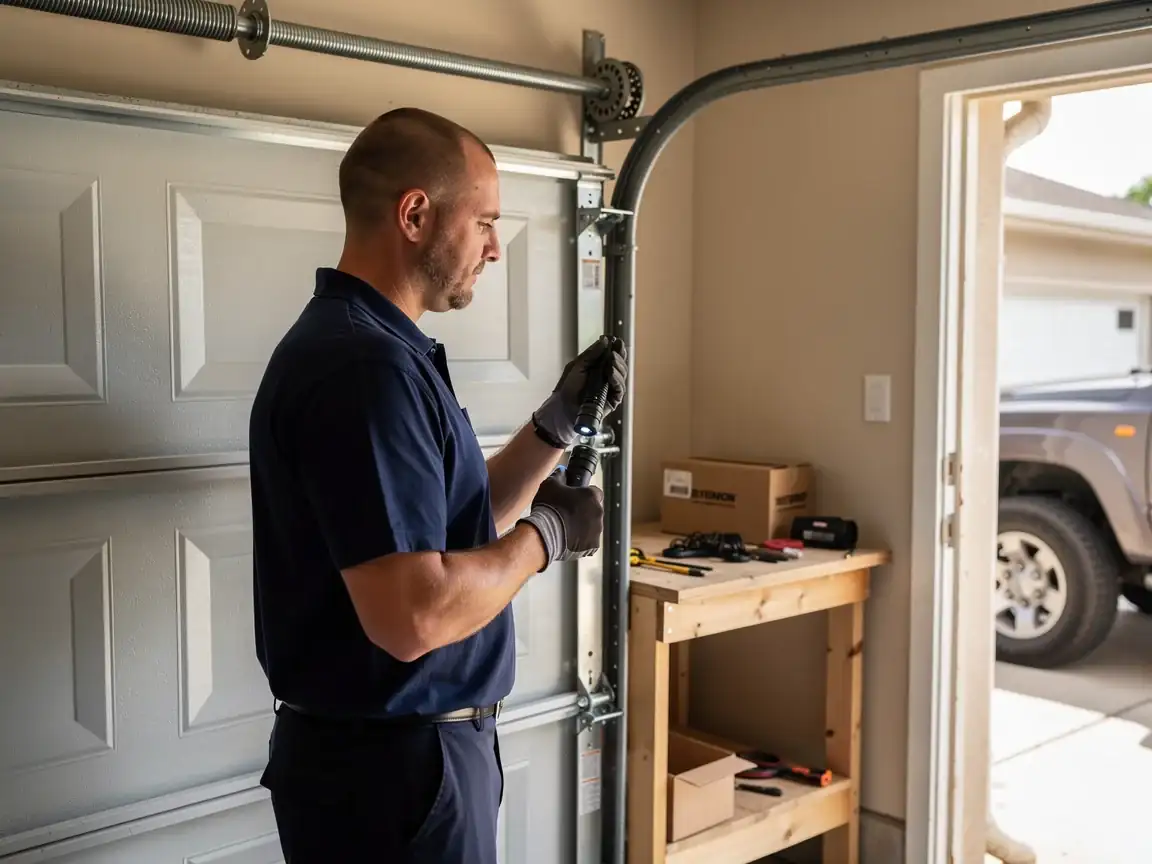
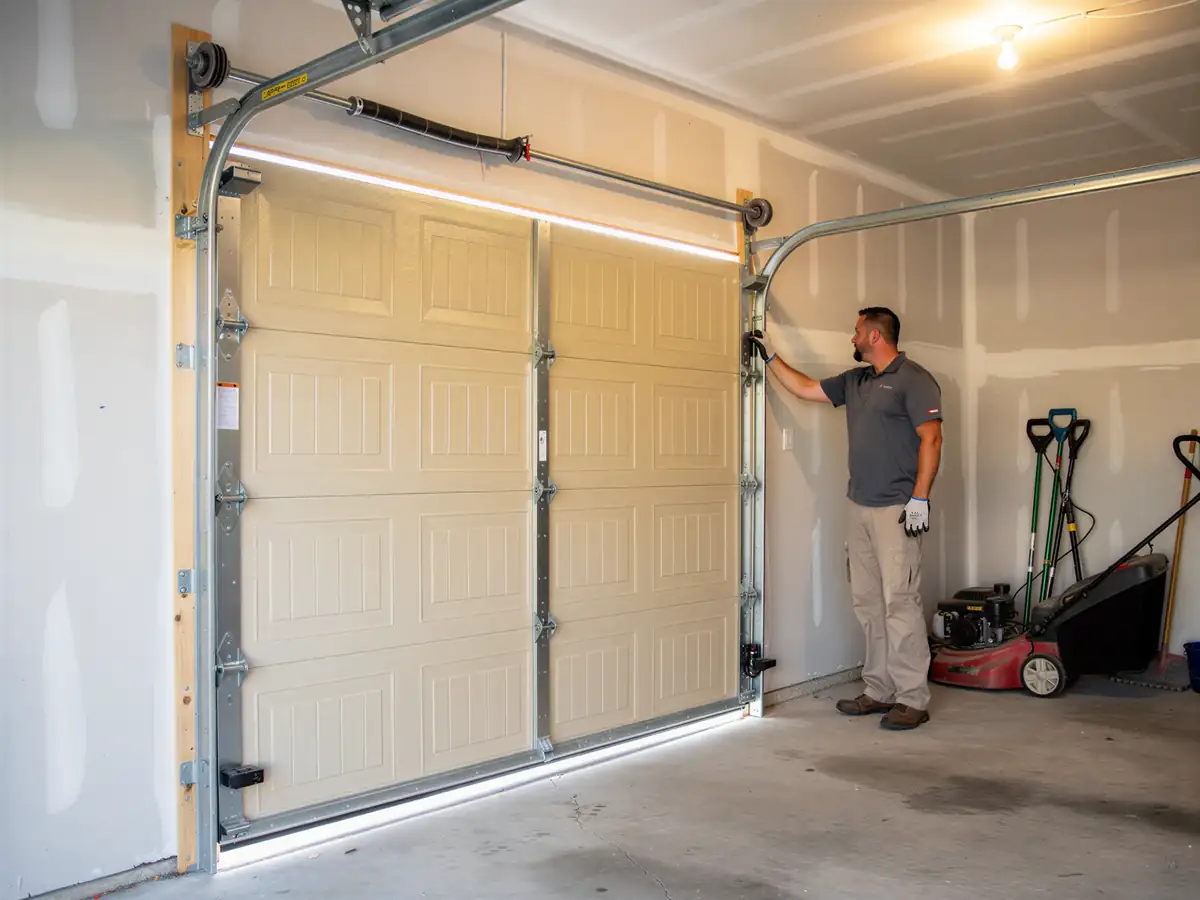
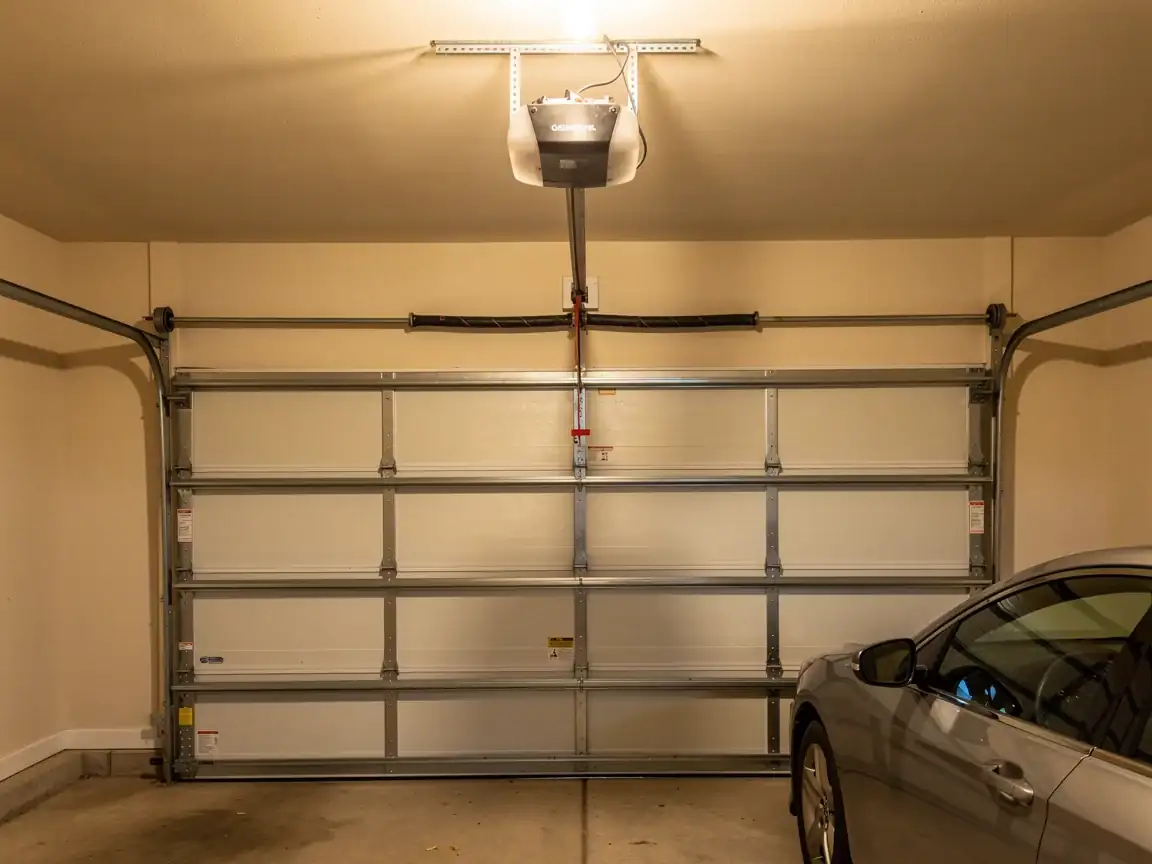
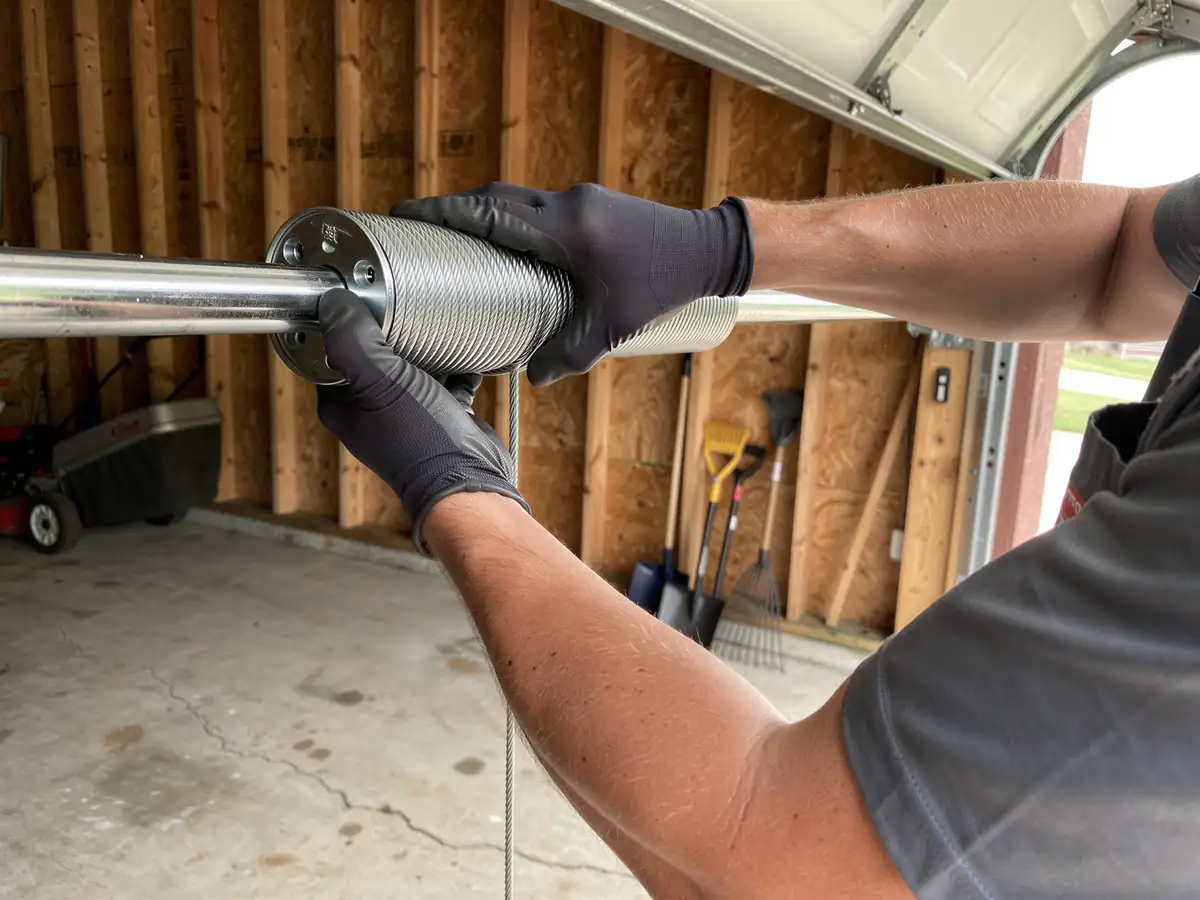
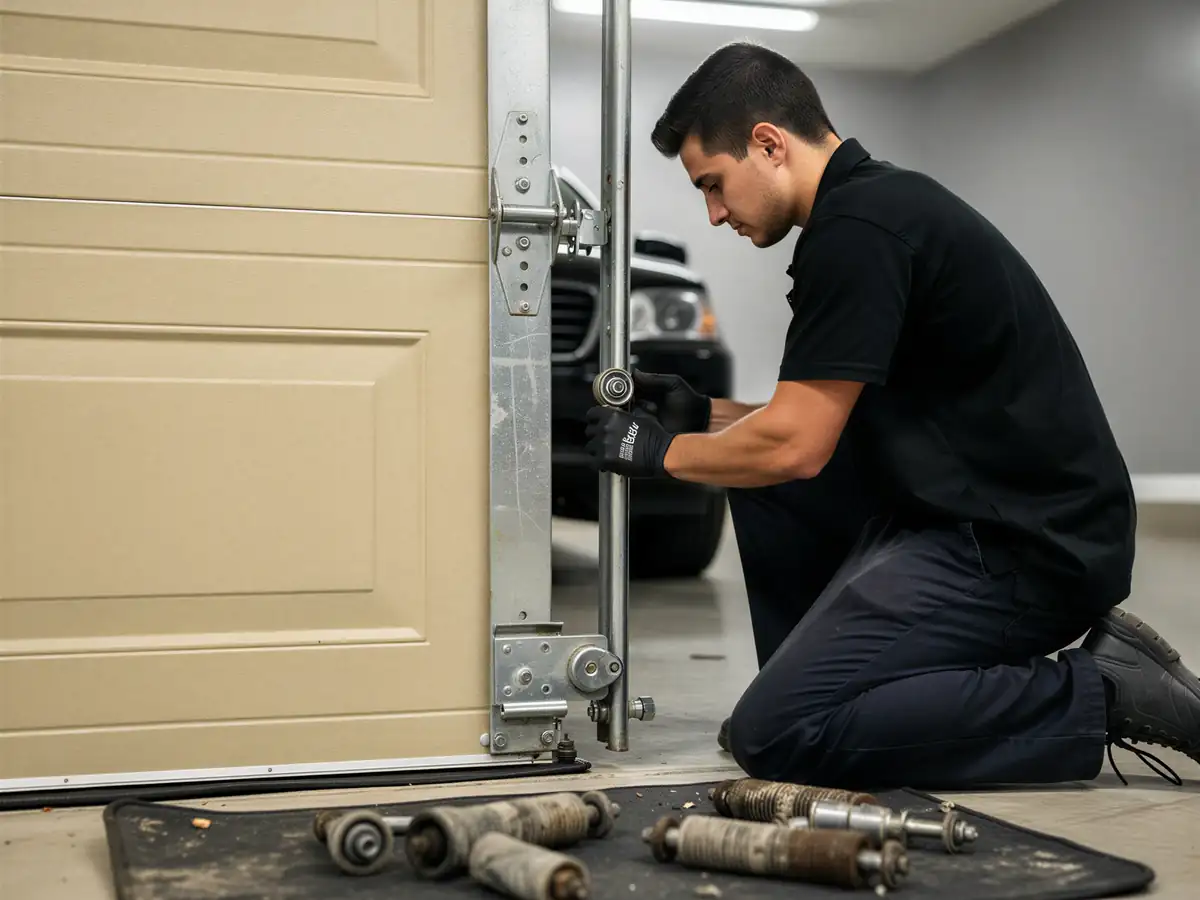
Where we draw the line is torsion springs and anything involving the high-tension cables. A torsion spring under load can cause serious injury if it lets go while you're working near it, and on the older side-mounted hardware common in homes built before the 1990s, the winding cones and bearing plates are often original and more brittle than they look. That's not a job to learn on your own garage.
If your door is from a home built in that 1964-1995 window and you've never had the spring system serviced, a yearly check is worth the call even if nothing sounds wrong yet. Catching a spring at 70% of its rated cycles is a maintenance visit. Catching it at 100% is an emergency repair.
What Causes It Around Here
Pocatello sits in a severe cold climate band
And that matters more for garage doors than people expect. Steel contracts in the cold, which tightens tolerances on tracks and rollers that were already set decades ago for a door that's now 30 to 50 years old. Lubricant that would hold up fine in a mild climate thickens and stops doing its job right when the door needs it most, which is why winter mornings are when a lot of these calls come in.
- 50 years
The age of the housing stock compounds it
A large share of homes across the service area were built in the 1980s and 90s, and the original torsion springs and openers in those houses are well past the point where