What Local Conditions Do
Pocatello sits in a COLD severe climate band, and that changes what breaks first and why. Steel contracts in deep cold, which tightens tolerances on tracks and rollers that were set for a summer afternoon, not a January morning. Torsion springs lose a measurable amount of lifting force as temperatures drop, so a spring that felt fine in September can struggle to lift the same door in a hard freeze. Weatherstripping and bottom seals age faster here too, because they're flexing through a wider temperature swing every year than they would somewhere milder.
This matters on a service call because we're not just checking whether the door opens. We're checking whether it's opening the way it should for the load and the cold, or whether the opener is compensating for a spring that's already lost tension. On an older door, that compensation can go on for months before anything snaps, and by then it's usually a cable or a bottom bracket that's taken the extra strain. A call in late fall, before the hard cold sets in, catches more of this than a call in February after something's already failed.
What to Look At First
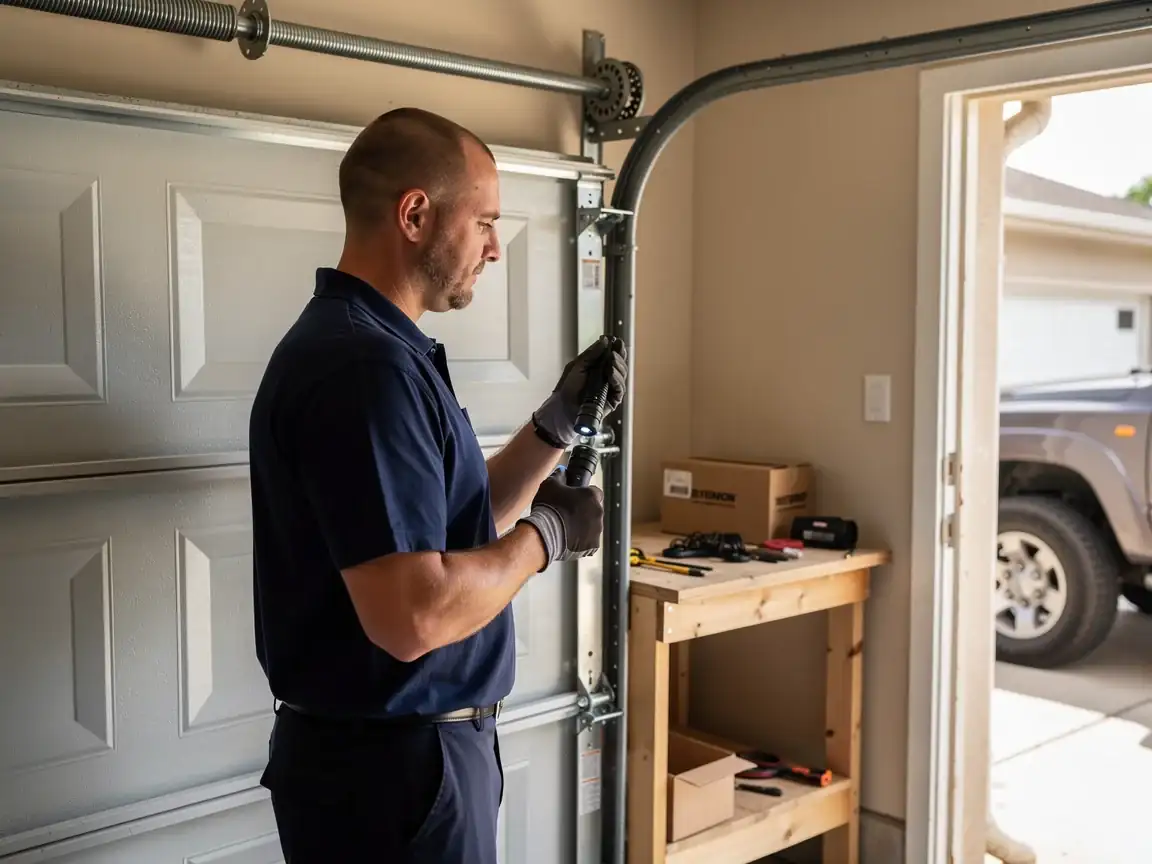
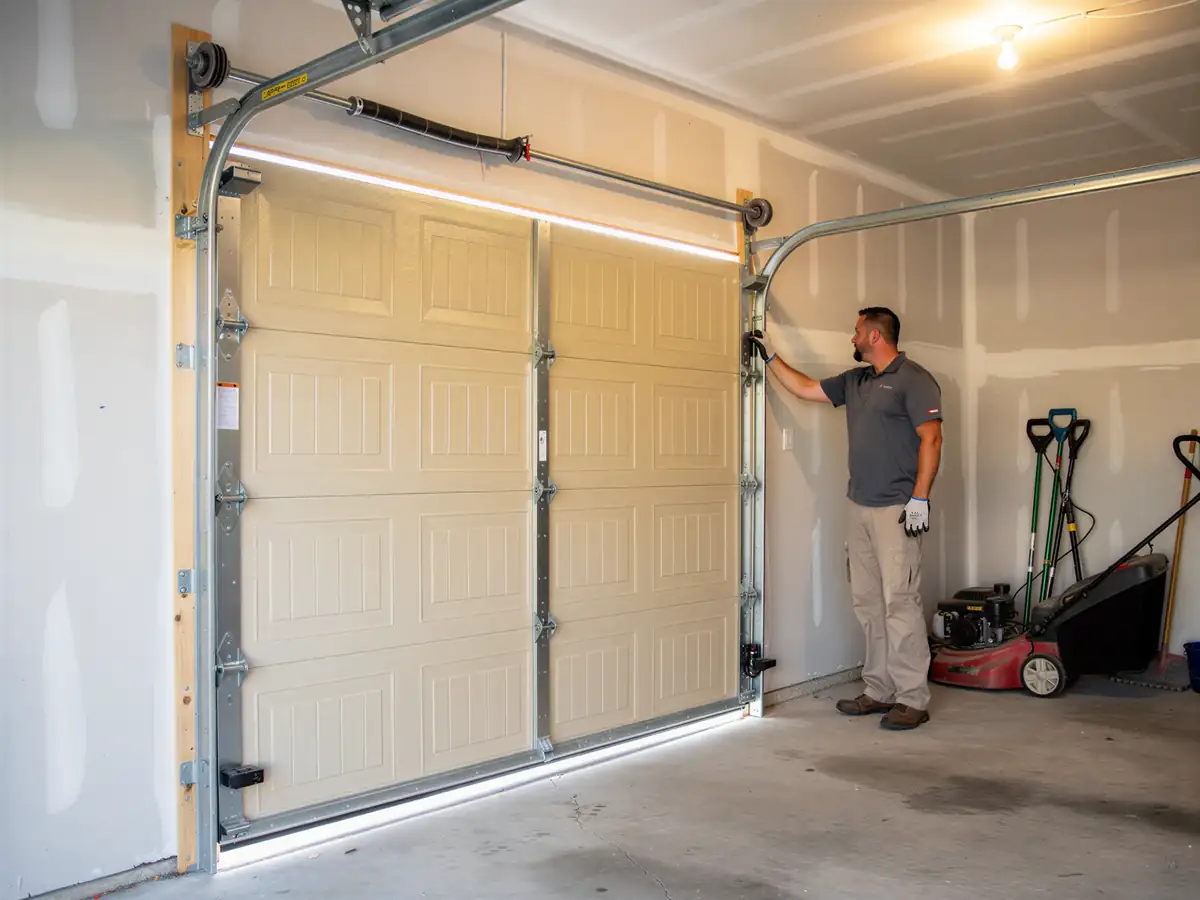
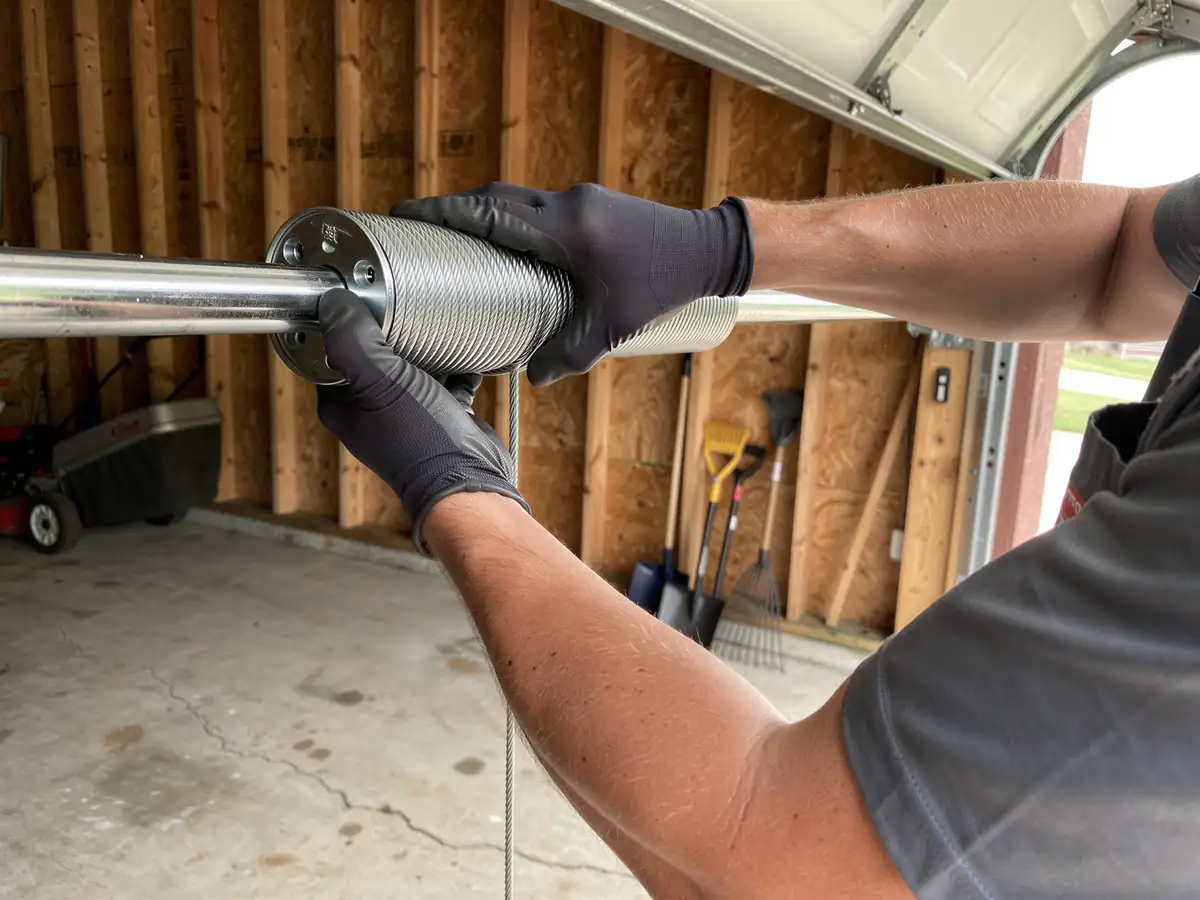
Housing in the Pocatello service area mostly went up between 1964 and 1995, with the median landing around 1980, and that one fact drives most of what we look at first. Doors and openers from that build-out are old enough that original hardware is on its second or third spring set, if it's been replaced at all. We start at the spring, since that's the part doing the most physical work and the part most affected by the cold band this area sits in.
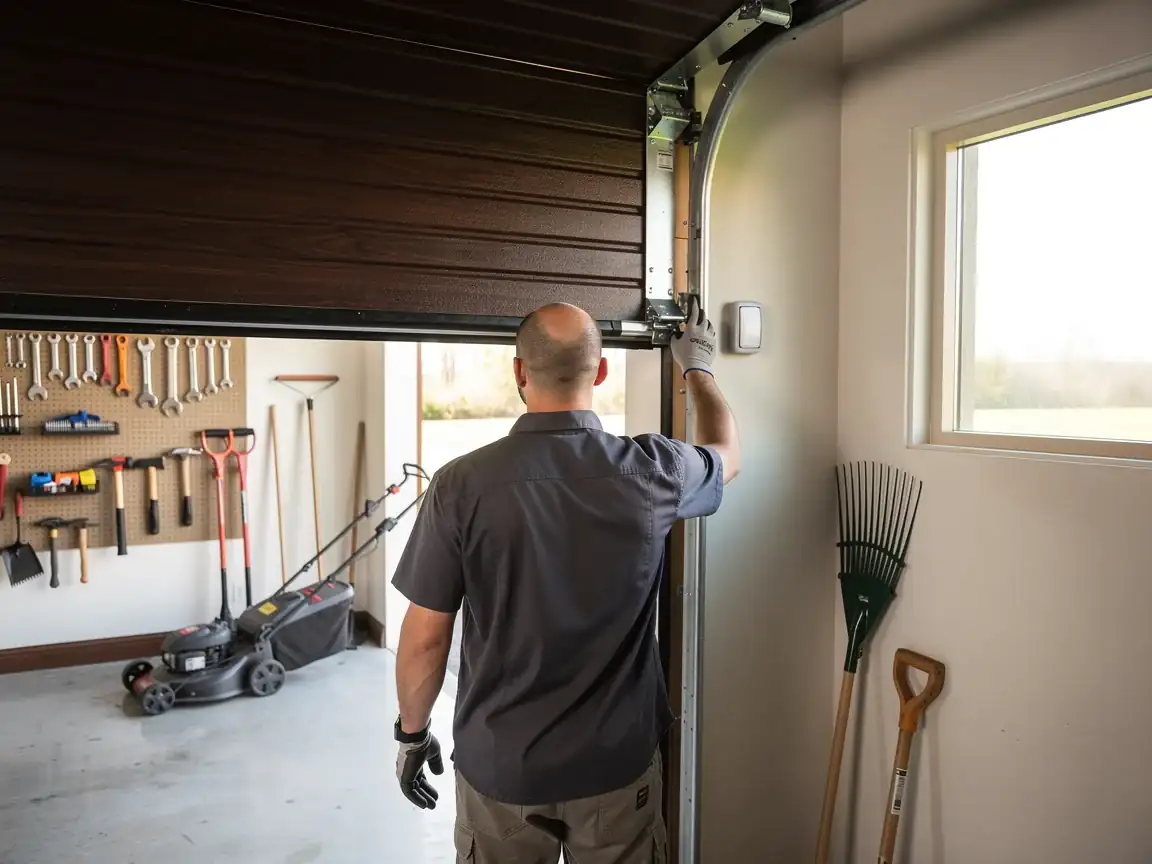
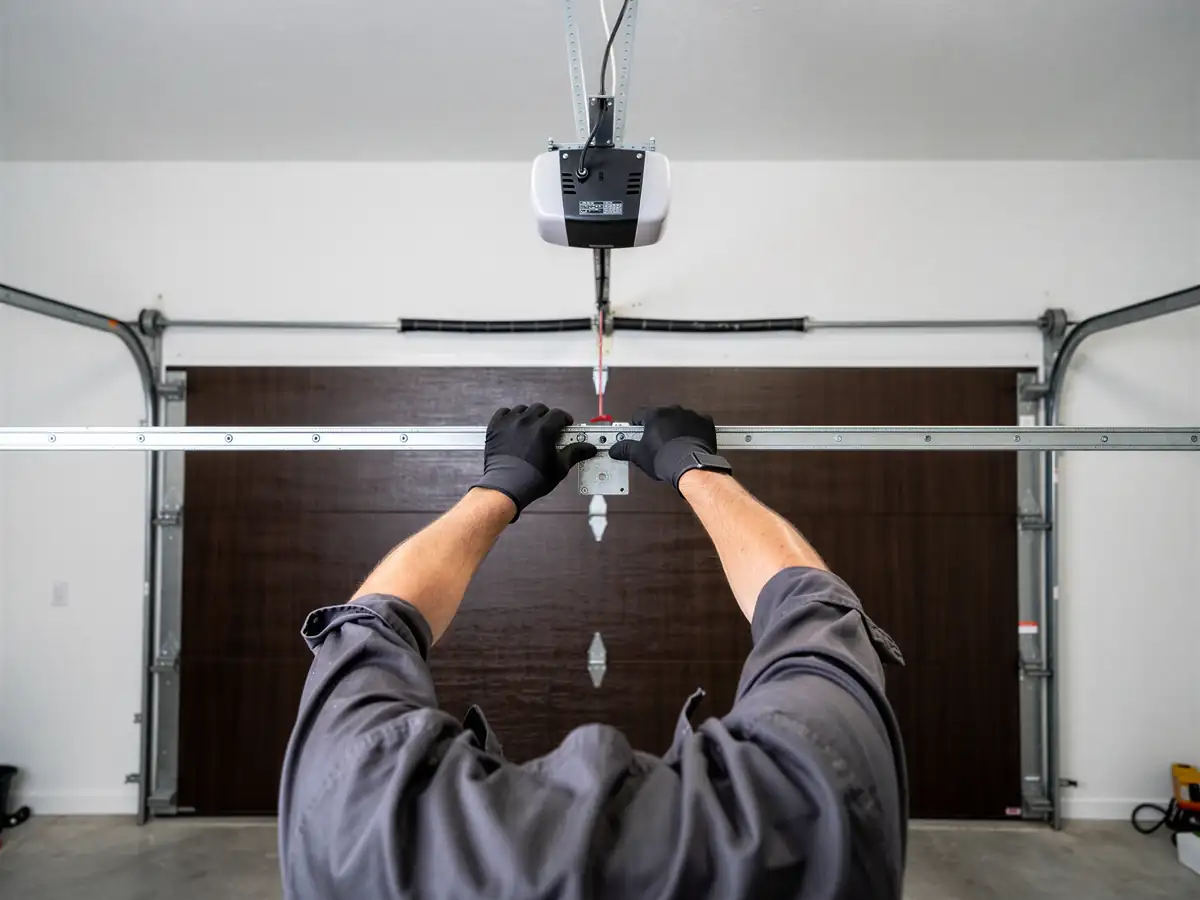
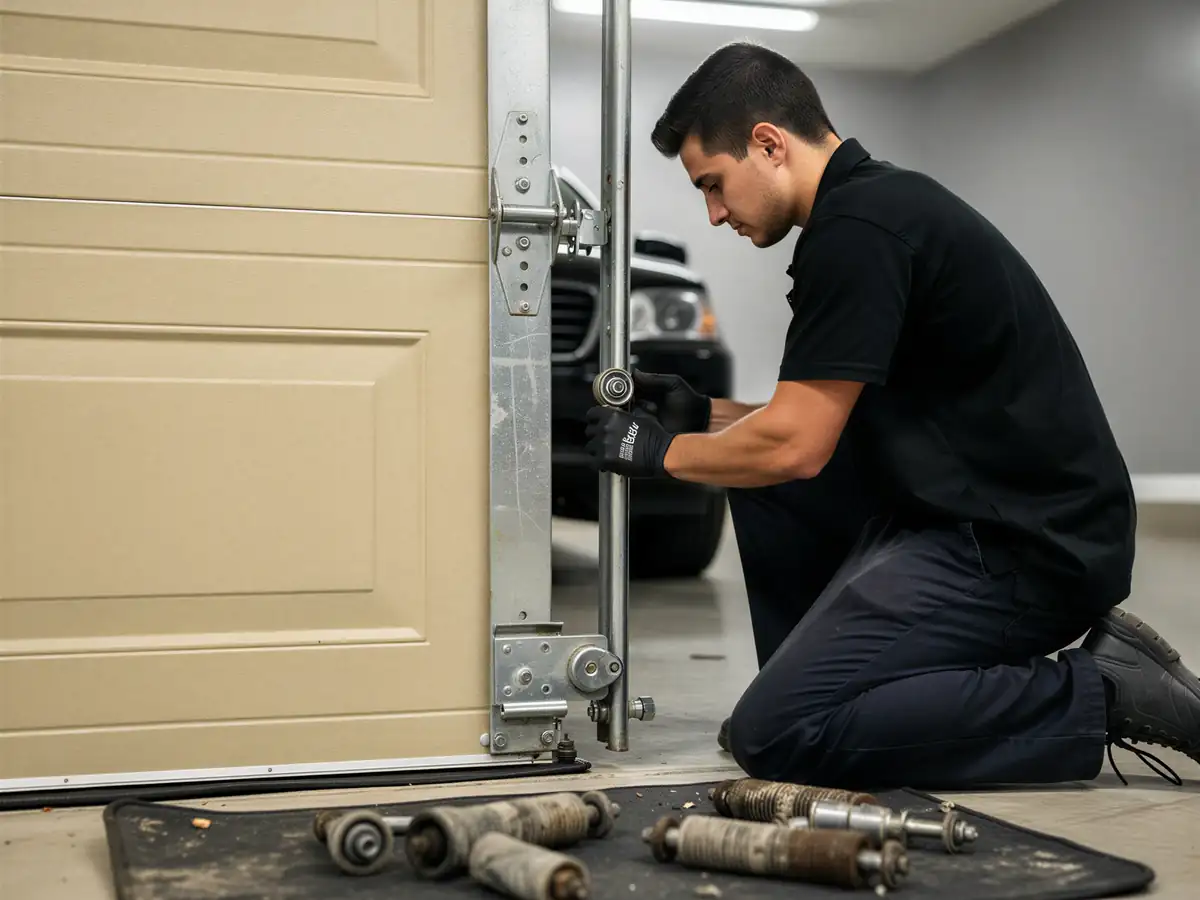
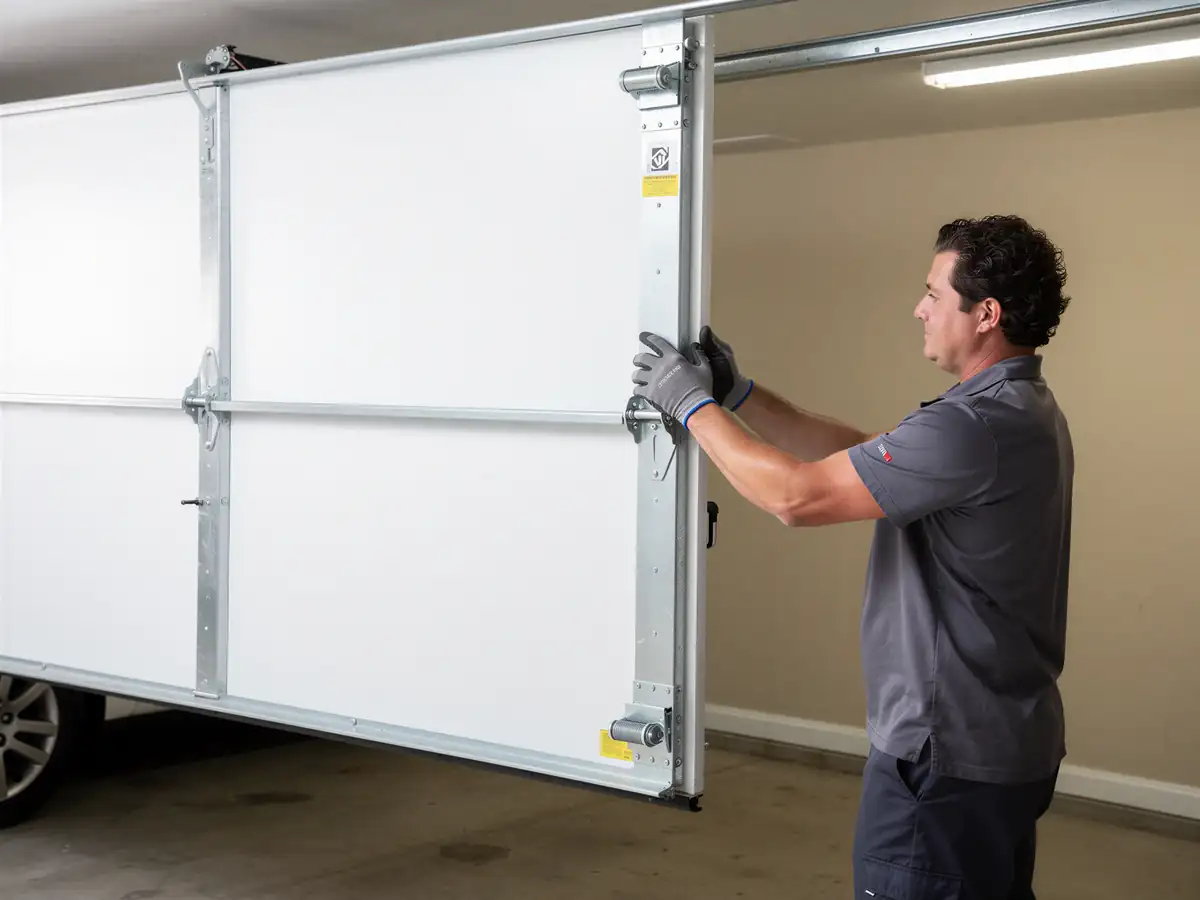
After the spring, we check the track alignment and the rollers riding in it. On a house from that 1964-1995 window, the original track is often still in place even if the door itself has been swapped once, and tracks that old can be slightly bent from decades of a door running a half-inch off true. We also look at the bottom seal and the weatherstripping along the jambs, since those wear out faster here than in a mild climate and a bad seal is often the actual source of a cold garage, not the door panel itself. None of this is guesswork - it's a short, specific list built around what a door from that era is likely to be dealing with by now.
The Situation
There are 7,325 households across the area we cover
With 3,950 of those owner-occupied houses, and most of them sit on garage doors and openers from that same 1964-1995 stretch. That's a lot of nearly identical torsion setups aging out at close to the same time, which is part of why spring failures tend to cluster by season rather than by house age alone - they're all roughly the same age to start with.
- 7,325 households
- 3,950 owner-occupied
Median household income in the service area runs about $66,000
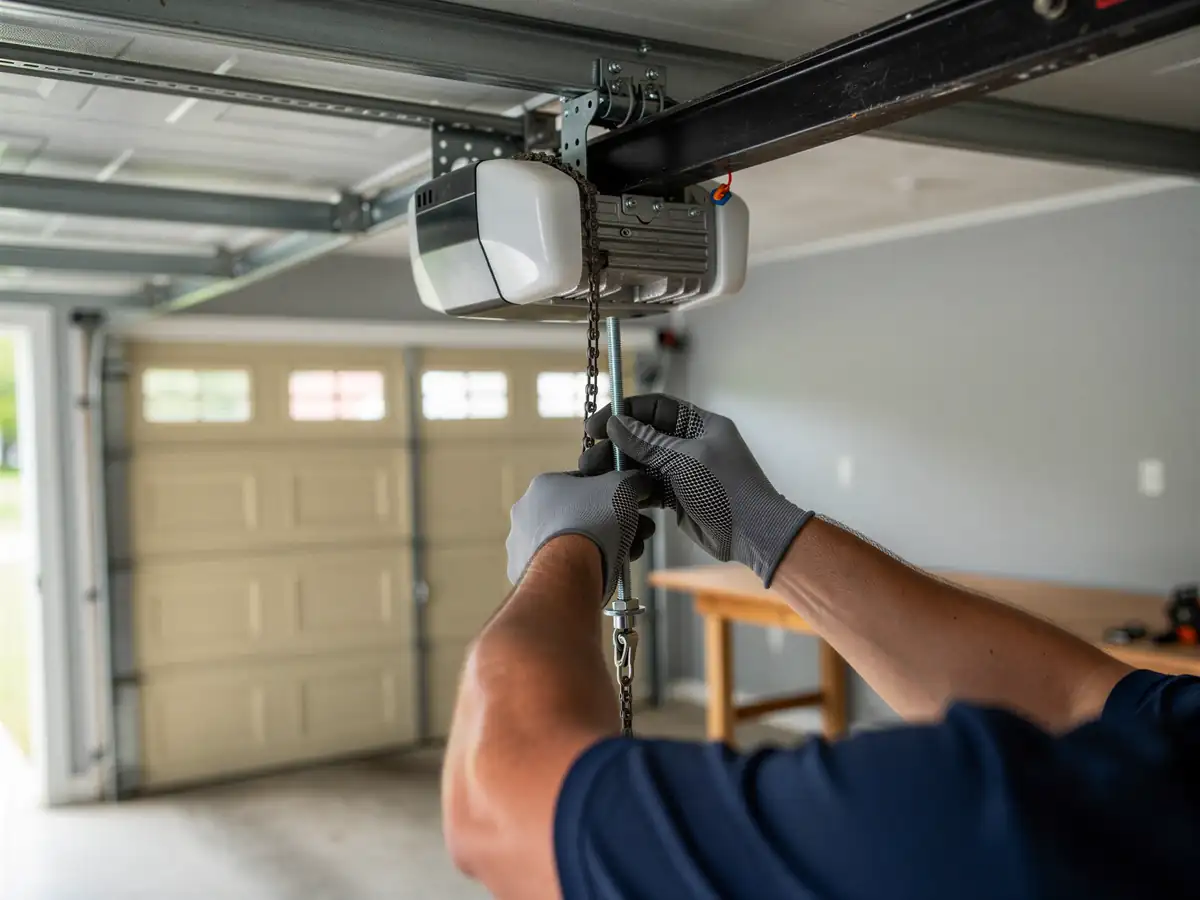
And that number shapes a decision we see on almost every older-door call: repair the spring and track now, or put that money toward a full opener and door replacement instead. There's no single right answer, but a call on a 1980s-era door usually comes down to that choice fairly quickly once we're looking at the actual wear.
We run calls out to Chubbuck four miles off, Arbon Valley six miles out, Fort Hall at ten miles, and Aberdeen at twenty
The farther out a call sits, the more likely the door's gone longer without anyone looking at it, which usually means more than one thing needs attention by the time we get there.
When It Stops Being a DIY Job
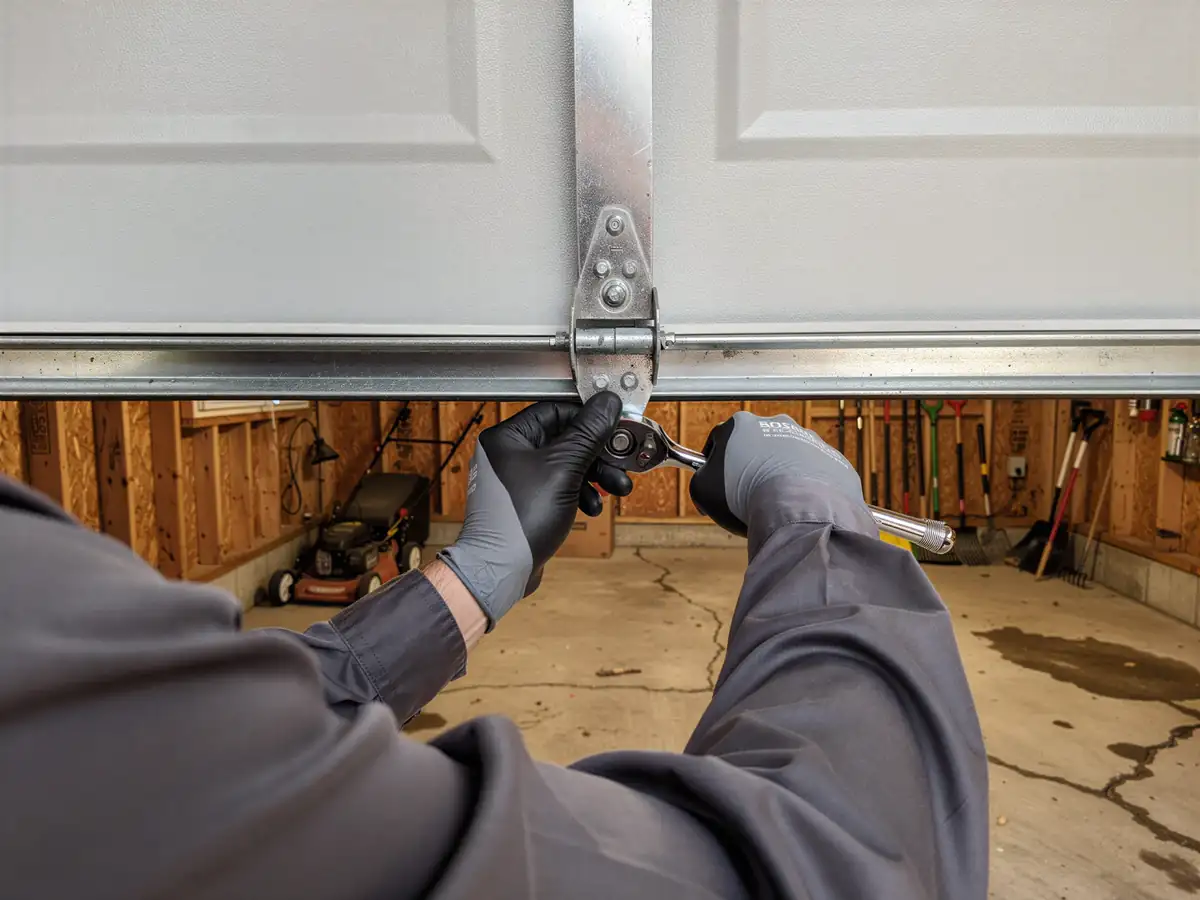
A loose roller or a dragging track you can often handle yourself with a wrench and some patience. A torsion spring is a different matter - it's wound under enough force to cause a serious injury if it lets go while you're working on it, and on a door from the 1964-1995 era the spring has usually been sitting under that tension for a long time without anyone checking it. We don't recommend homeowners touch spring tension themselves, full stop.
Here's the honest limitation: if a part has been discontinued and the door itself is near the end of its life, we'll say so rather than chase down a match for original hardware that isn't being made anymore. Sometimes the right call on an older door is a new one, not a repaired one, and we'd rather tell you that up front than bill you for a patch that won't hold through next winter. If the spring's gone, the cable's frayed, or the opener's straining on cold mornings, that's the point to call rather than keep adjusting it yourself.